
ERP Customization: Boost Flexibility in Manufacturing

You can’t afford systems that slow you down when your customers expect personalization, quick turnarounds, and flawless quality. At SKM Group, we’ve seen manufacturers struggle with “off-the-shelf” ERP systems that promise control but deliver constraints.
That’s where ERP customization changes the game. When done strategically, it doesn’t just tweak your system – it molds your ERP into the heartbeat of your production line, aligning technology with the way you actually operate. Flexibility, efficiency, and precision become built-in features, not wishful goals.
ERP customization means modifying an enterprise resource planning (ERP) system’s code, workflows, or user interface to fit your unique business processes. It goes beyond simply turning on a few settings. It’s about engineering the ERP environment to mirror your exact production realities – from order entry to shop floor control.
At SKM Group, we often explain it this way: configuration helps you fit into the system; customization helps the system fit you. When you manufacture specialized products, this distinction is more than semantics – it’s the line between operational harmony and ongoing frustration.
Customization in ERP vs. Standard Configuration
Many businesses confuse customization in ERP with configuration. Configuration lets you change predefined parameters – think toggling options, adjusting templates, or defining approval rules. It’s flexible, but only within the vendor’s sandbox.

Customization, on the other hand, breaks through that sandbox. It allows you to alter system behavior itself – writing custom code, building unique integrations, or designing new modules. Configuration adapts to your needs within limits; customization removes those limits entirely.
The difference matters most when your operations don’t follow conventional molds – and in custom manufacturing, they rarely do.
Core Components of ERP Customization
Effective ERP customization doesn’t happen in one layer. It’s an ecosystem of enhancements that work together to deliver agility.
The core components typically include:
When properly architected, these layers form a system that not only meets today’s needs but scales as your factory evolves.
Get scalable, secure, and reliable support via SKM Group’s IT services!
Every successful customization starts with a crystal-clear understanding of your business requirements. Before writing a single line of code, you must know why you’re customizing.
At SKM Group, we guide clients through structured discovery sessions to map their manufacturing processes – order cycles, material flows, capacity constraints, and reporting needs. This deep dive helps us identify where standard ERP logic breaks down and where tailored functionality creates measurable value.
The key question you should ask is not “What can the ERP do?” but “What do we need the ERP to do for us?” That mindset shift is where flexibility begins.
Common Types of ERP Customization (UI, Reports, Workflows)
Customization in ERP manifests in different forms, depending on your operational goals. Three of the most common are:
Together, these enhancements simplify daily operations, empower decision-makers, and reduce time wasted adapting your people to inflexible systems.
Risks and Challenges in ERP Customization
Of course, ERP customization isn’t a silver bullet. Done poorly, it can create technical debt, version lock-in, or maintainability issues. The main risks come from lack of planning, weak documentation, and untested assumptions.
At SKM Group, we’ve seen companies fall into the trap of over-customizing – changing so much that upgrades become impossible. The solution is balance. Customization should always serve a measurable business purpose, not personal preferences or one-time workarounds.
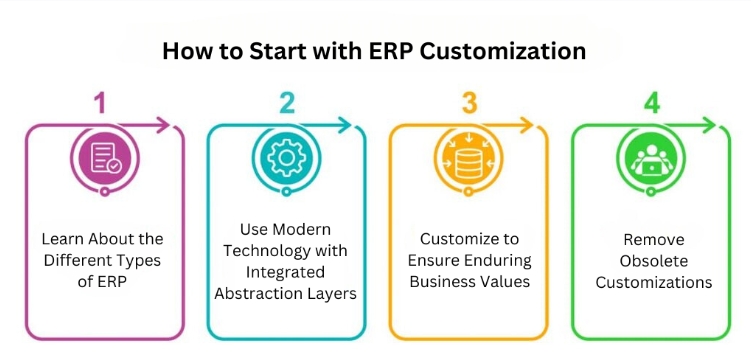
You must also consider long-term sustainability. Ask yourself: will your internal team understand and maintain these customizations five years from now? That’s why our approach always includes future-proofing measures such as modular code, proper documentation, and alignment with vendor upgrade paths.
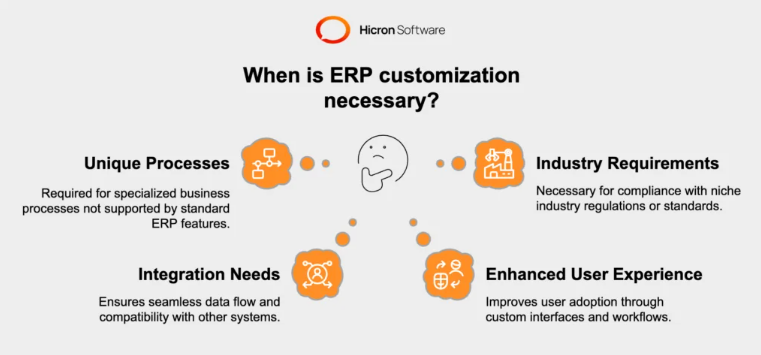
Manufacturing today is not one-size-fits-all – and neither is your ERP. Standard systems are built for “average” operations. But if your business differentiates through flexibility, speed, or product complexity, customization in ERP becomes essential.
When your production floor runs a mix of engineer-to-order, make-to-order, and configure-to-order models, a generic ERP simply can’t keep up. You need workflows that mirror your production logic, costing models that reflect your material variability, and dashboards that translate machine data into actionable insights.
Customization turns ERP from a static record-keeper into a dynamic decision platform. It helps you reduce manual interventions, automate repetitive tasks, and gain real-time visibility into every production cycle.
At SKM Group, we’ve watched manufacturers unlock new levels of efficiency by tailoring their ERP systems to match their DNA. The result? Faster delivery times, lower error rates, and better customer satisfaction – without sacrificing control or compliance.
Strengthen your operations with flexible IT outsourcing!
There’s a right time to adopt ERP for custom manufacturing, and it often comes when your existing systems can no longer scale with your ambitions.
If your teams juggle spreadsheets, disconnected software, or workarounds to manage orders, that’s your first signal. When quality assurance, costing, and capacity planning rely on guesswork instead of live data, it’s time to rethink your digital foundation.
ERP for custom manufacturing becomes indispensable when:
In short, customization-ready ERP isn’t just a technology investment – it’s your roadmap to operational resilience.
Building flexibility through ERP customization requires method, not momentum. Customization without a plan is like machining without blueprints – you’ll waste material, time, and precision. At SKM Group, we’ve learned that success begins long before the first code modification. It starts with clarity, structure, and disciplined execution.
Assessing Current ERP for Custom Manufacturing Needs
Before customizing, you must understand your system’s baseline capabilities. Many ERP platforms already contain modular flexibility – the key is identifying which processes truly require change.
You should conduct a gap analysis comparing your operational goals with current ERP functionality. Where are bottlenecks forming? Which reports fail to inform? Which manual tasks could be automated? This assessment helps separate “nice-to-have” customizations from the ones that directly enhance efficiency or customer experience.
A well-defined assessment phase ensures your customization roadmap is grounded in facts, not assumptions.
Selecting the Right Customization Approach
There’s no one-size-fits-all model for customization in ERP. Your approach should reflect your technology maturity, vendor ecosystem, and manufacturing complexity.
At SKM Group, we help clients choose between three core paths:
Each level has cost, risk, and maintenance implications. The goal is to choose the least invasive approach that still achieves your business objectives.
Engaging Stakeholders in Customization in ERP
ERP customization is as much about people as it is about software. Your project will fail without stakeholder alignment – and that includes executives, production managers, IT staff, and even end-users.
You must define ownership early. Who will validate requirements? Who signs off on process changes? At SKM Group, we encourage forming a cross-functional ERP committee that meets regularly to evaluate progress, test iterations, and provide feedback.
Remember, the more engaged your users are during the customization phase, the smoother the adoption will be after go-live.
Estimating ERP Customization Cost and ROI
Custom ERP work isn’t cheap – but it shouldn’t be viewed as an expense. It’s an investment in efficiency, data accuracy, and long-term competitiveness.
To estimate ROI, calculate both direct and indirect benefits. Direct gains include reduced labor hours, faster reporting, and lower rework costs. Indirect gains often appear in improved morale, better customer satisfaction, and faster decision-making.
At SKM Group, we recommend using a “value-to-effort ratio.” Every customization item should justify its existence through measurable return or strategic value. If it doesn’t – it’s not worth building.
Defining Success Metrics for ERP Customization
Without metrics, customization becomes guesswork. You need tangible indicators that show whether the project delivered real value.
Some examples include: reduced cycle times, increased data accuracy, lower manual input rates, and improved on-time delivery. Metrics should be tracked continuously, not just after launch.
Defining success criteria early ensures your customization team aligns around outcomes, not features. It transforms your ERP from a technical tool into a performance enabler.
Achieve long-term success with bespoke custom software development!
Leadership is the difference between adaptation and chaos. In ERP customization, you need a champion who understands both business strategy and technology execution.
Ideally, your project leader should be a hybrid – someone who can translate shop-floor needs into digital workflows and communicate effectively with developers. At SKM Group, we often act as the bridge between operational teams and ERP architects, ensuring that every modification serves your strategic direction, not just technical curiosity.
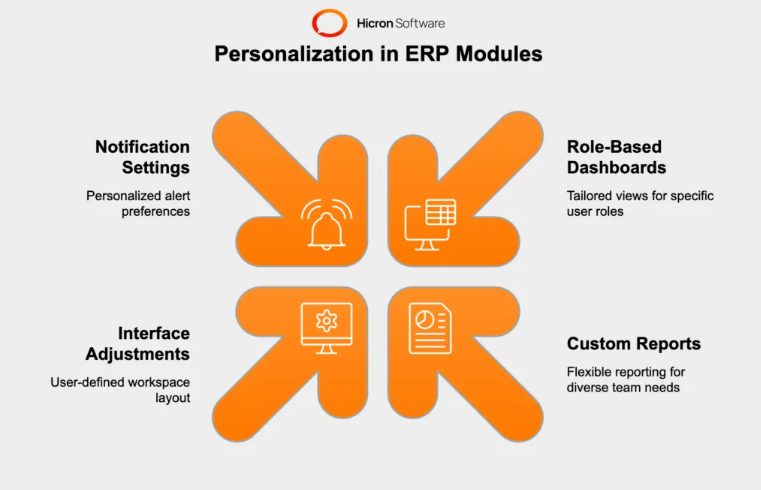
The best customization leaders don’t chase perfection. They pursue alignment – between process, people, and platform.
While every manufacturer can benefit from ERP for custom manufacturing, certain industries feel the impact more acutely. These include aerospace, automotive components, industrial machinery, electronics, and medical devices – sectors where engineering-to-order and high variability define daily operations.
These industries require dynamic BOMs, strict compliance tracking, and real-time visibility into production and supply chain data. Standard ERP systems struggle here because every order might represent a unique configuration. Customization bridges that gap, giving you the agility to adapt without losing control.
At SKM Group, we’ve seen clients in these industries turn complex orders into streamlined processes simply by aligning ERP functionality with how their business actually builds, tests, and ships.
Customizing your ERP is a transformation journey. The technical part is only half the equation – sustainability, governance, and adoption determine long-term success. Below are several best practices we apply at SKM Group for every customization project.
Ensuring Upgradability and Maintainability
ERP systems evolve. Vendors release new versions, security updates, and modules. If your customizations break with each upgrade, you’ll face downtime and rising maintenance costs.
To avoid this, keep modifications modular, isolated, and well-documented. Use extension frameworks and APIs rather than hardcoding wherever possible. Sustainable customization means your ERP stays adaptable to both your business and the vendor’s roadmap.
Documenting Custom Code and Configurations
Lack of documentation is the silent killer of ERP longevity. Every customization – from a simple script to a complex logic module – must be clearly documented.
At SKM Group, we maintain a living repository of custom code, dependencies, and version history for each client. This ensures future developers and system admins understand how the system evolved, reducing dependency on any single individual.
Documentation isn’t bureaucracy – it’s your insurance against knowledge loss.
Testing Automation in ERP Customization
Testing is not an afterthought; it’s the foundation of stability. Automated testing frameworks accelerate validation, reduce human error, and ensure that each customization integrates smoothly into existing workflows.
By simulating real manufacturing scenarios – from order entry to invoicing – you can verify that every module works as intended. Automation transforms testing from a time-consuming task into a continuous assurance mechanism.
Training Users on Customized ERP Features
No customization matters if users don’t adopt it. Training is how you convert digital potential into operational impact.
Your teams should not only know how to use the new features but also why those changes exist. At SKM Group, we design user onboarding programs that focus on workflow benefits, not just button clicks. When people understand purpose, they embrace change.
Managing Change Control in Customization in ERP
Change control is your project’s safeguard against chaos. Every modification must go through review, approval, and version tracking. Without it, you risk conflicting updates and loss of traceability.
Implement a formal change management process that covers requirement validation, testing, and rollback plans. This discipline keeps your ERP environment stable and auditable, even as you evolve it over time.
In modern manufacturing, flexibility isn’t optional – it’s survival. ERP customization gives you the power to transform your system from a rigid framework into a living, adaptive core that grows with your operations.
At SKM Group, we believe customization isn’t about writing more code – it’s about engineering better alignment between your vision and your tools. When your ERP reflects your true process DNA, it stops being just software. It becomes your competitive edge.
Customization, done right, bridges the gap between technology and agility – helping you respond faster, scale smarter, and manufacture with confidence in an unpredictable world.

Configuration uses built-in settings to adapt your ERP to business needs, while customization involves modifying the system’s code or architecture to introduce new functionality. Configuration is faster and safer, but limited. Customization provides deeper alignment and flexibility – ideal when your operations don’t fit standard ERP models.
The timeline depends on your project’s scope, process complexity, and level of customization. On average, full ERP for custom manufacturing implementation can take 6 to 18 months. Projects with high integration or engineering-to-order features may take longer, but phased rollouts help reduce disruption.
Yes – if done poorly. Over-customization can make future upgrades difficult or costly. That’s why modular coding, proper documentation, and alignment with vendor standards are essential. At SKM Group, we design every customization to remain upgrade-safe and maintainable.
Costs vary widely based on ERP platform, complexity, and business size. A light customization might cost a few thousand dollars, while deep, process-specific modifications can run into hundreds of thousands. The key is to focus on ROI – customizing only where it delivers measurable operational improvement.


In our team, Dominik Bigosiński is responsible for driving the growth of online businesses through the strategic use of content. As an expert in his field, he has collaborated with organizations from the US, UK, Norway, and Poland since 2018, contributing to the development of over 100 blogs and supporting more than 450 B2B and e-commerce brands worldwide. His passion for conscious personal growth and philosophy is reflected in his work, where he focuses on delivering thoughtful, audience-centered strategies that drive long-term results.
Transform your business processes with Artificial Intelligence. See how we can help.
Discover moreStrategic insights into technology, software development, and digital growth

Not all vendor badges are created equal. Discover what the Microsoft Solutions Partner designation actually verifies - from team skilling to proven client outcomes - and why legacy "Gold" status no longer guarantees current expertise
You can’t afford systems that slow you down when your customers expect personalization, quick turnarounds, and flawless quality. At SKM Group, we’ve seen manufacturers struggle with “off-the-shelf” ERP systems that promise control.

Discover how Artificial Intelligence is revolutionizing software testing by automating tasks, improving accuracy, and enhancing efficiency. Learn about AI-driven tools, defect prediction, performance testing, and more

How to meet the challenges of artificial intelligence? Discover strategic means for enterprises, including IT outsourcing, to effectively manage AI integration.

Discover how AI optimizes sales workflows, from lead generation to post-sale support. Explore the pivotal role of custom software development in maximizing AI's potential for efficiency and customer satisfaction.

Discover how artificial intelligence is reshaping the workforce landscape, from job displacement to new opportunities. Dive into the transformative power of AI, exploring its role in increasing efficiency and creating new jobs.
.avif)
Discover the groundbreaking changes that shaped the landscape of artificial intelligence in 2023. From the expansion of autonomous decision-making systems to the transformative impact of deep machine learning in various industries.

Explore the transformative world of live speech translation powered by artificial intelligence! From business meetings to educational settings, discover the diverse applications of speech translation technology.

Elevate your IT project management with artificial intelligence. Discover how AI automates tasks, optimizes processes, and provides valuable insights. Explore AI's role in automation, budget management, data analysis and risk identification.
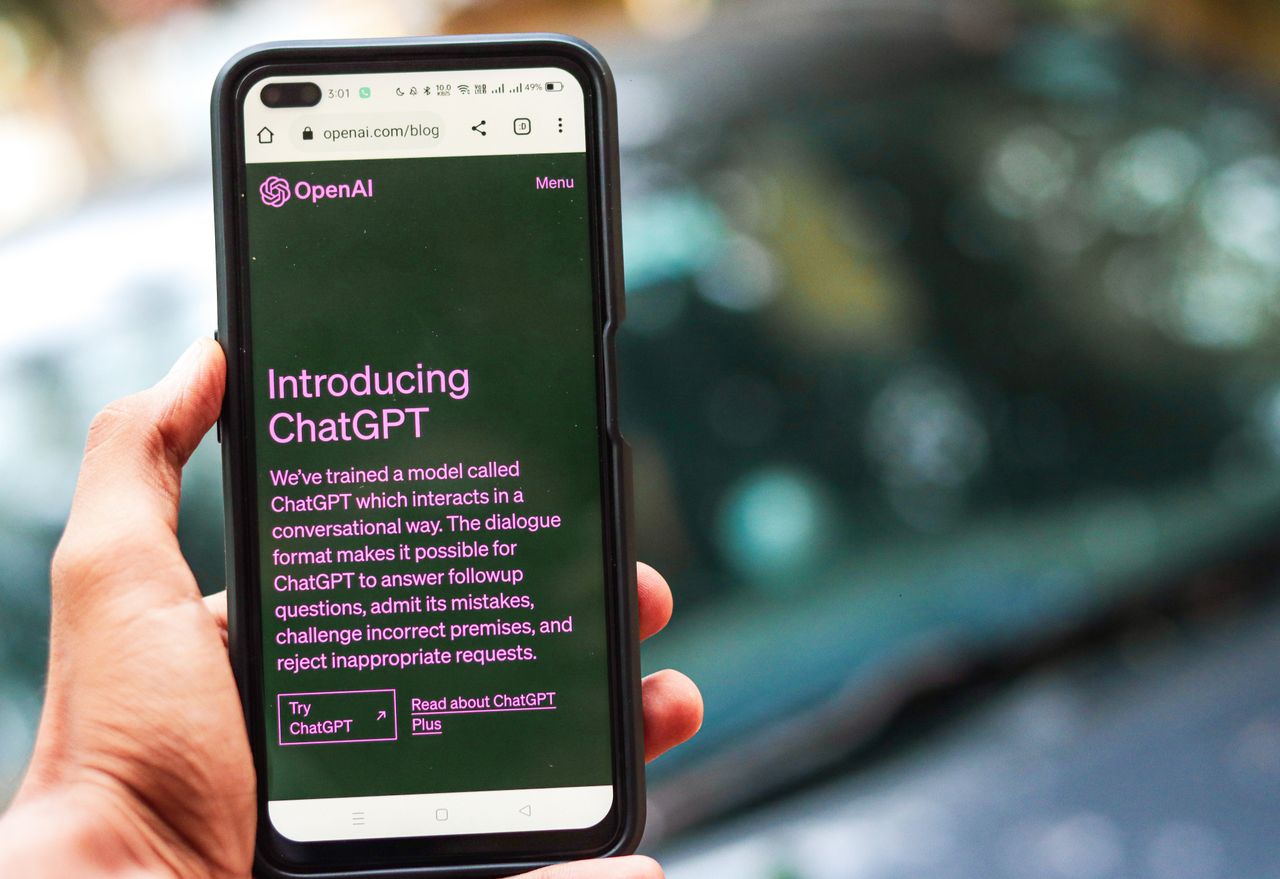
Dive into the comparison of leading chatbots, including ChatGPT, MonicaAI, ClaudeAI, Bing, PerplexityAI, and WriteSonic, understanding their functionalities, advantages, and drawbacks.

Have you ever imagined mobile applications that understand your speech, tailor content to your interests, and analyze images to provide you with exactly what you need? The world is currently undergoing a revolution thanks to Artificial Intelligence.

In the fast-paced world of software development, getting things done efficiently and coming up with new ideas is really important. With more and more lines of code and complicated projects, developers have to deal with a lot of tough problems.

Artificial intelligence has made its way into various aspects of life, and the field of design is no exception. We are currently witnessing a revolution that impacts the process of designing and creating aesthetic and functional solutions.

Artificial intelligence is one of the most innovative and dynamically developing fields in IT. In practice, the use of AI technology can be found in almost every industry, from medicine and finance to education and entertainment.

Comments