Key reasons why you should not postpone upgrading your old system.
Outdated technology can expose your business to cyber threats and compliance issues.
Older systems often require more maintenance, leading to escalating costs.
Legacy systems may not integrate smoothly with modern software, limiting your business's capabilities.
Legacy systems may hinder scalability, preventing businesses from adapting to market changes or customer needs quickly.

We begin the process with an in-depth evaluation of your legacy software. This phase focuses on assessing its performance, functionality, and compatibility with your current business objectives. This step helps us identify the specific challenges and limitations you face.
Following evaluation, we define modernization objectives, then create a roadmap with necessary steps, timelines, and resource allocation. Additionally we will select the best strategy - like replatforming or rebuilding - to meet your needs effectively.
We bring your modernization plan to life, ensuring a smooth integration with your existing systems. This may involve data migration, gradually replacing pieces of code, or building a new platform alongside the old one and transitioning users step by step. We prioritize keeping disruptions to a minimum, so your operations run smoothly.
After modernization, our support team will monitor, maintain, and optimize your systems to ensure they remain secure and perform at peak efficiency.
Transforming Legacy Systems for Future-Ready Performance
Connecting legacy systems with new software through APIs and microservices.
Transitioning legacy applications to cloud platforms for increased flexibility and reduced costs.
Enhancing the user interface and experience to meet modern standards and improve usability.
Automating manual processes embedded in legacy systems, enhancing workflows, and optimizing the business logic.
Rebuilding fully redesigns legacy systems from the ground up, aligning them with modern technological standards and future business needs.
Legacy systems play a crucial role in many organizations, and modernizing them demands a well-thought-out approach. This ensures that businesses can keep pace with evolving technology while preserving the strengths of their legacy software.
Encapsulation adds modern APIs to legacy systems with high business value, enhancing functionality while keeping the core code intact. It’s a low-disruption approach for stable systems.
Move legacy systems to new infrastructure without changing their functionality. This low-risk, cost-effective solution is ideal for businesses looking to quickly adopt modern environments.
Replatforming makes minimal adjustments to applications, enabling them to leverage basic cloud capabilities. It’s a balanced approach, modernizing systems without extensive overhauls.
Restructure existing code to enhance flexibility, efficiency, and reduce technical debt. This approach optimizes legacy systems for cloud-native features.
Rearchitecting involves significant redesigns to integrate new functionalities and accommodate growth. It’s ideal for systems needing substantial improvements in capabilities.
Rebuilding fully redesigns legacy systems from the ground up, aligning them with modern technological standards and future business needs.

For a global consulting firm, we rebuilt highly specialized software that serves as a tax configurator. Relying on the Azure platform and .NET Core technology, we significantly reduced failure rates and migrated key functions to more modern technologies.


Pemicont, a German manufacturer of mattresses and children’s bedding, faced a challenge to improve sales and logistics of its products. We extended the functionality of the legacy desktop system to a new web application integrating with Plentymarkets and Baselinker.


Verge Sport, a sportswear company, faced the challenge of implementing a number of improvements inside its production management system / ERP. Using the Azure platform and ASP.NET framework, we migrated the existing functionality to more modern technological solutions

Legacy modernization for Banking helps financial institutions improve security, regulatory compliance, and scalability without disrupting critical operations.
Legacy modernization for Insurance, we enable insurers to modernize core systems, automate processes, and adapt faster to market changes.
Modernization for Manufacturing focuses on integrating legacy systems with modern platforms and automation to increase efficiency and operational control.
Reach out to us and discuss your specific needs. We're here to help!
Legacy software modernization refers to updating outdated systems and applications to newer, more efficient technologies. Businesses must modernize legacy systems to enhance security, improve performance, and ensure compatibility with modern infrastructures. This can also reduce maintenance costs and improve user experience, ultimately allowing companies to remain competitive.
Modernising legacy software provides several benefits, including improved system security, better performance, lower operational costs, enhanced scalability, and the ability to integrate with modern technologies. Additionally, modernized systems offer a more intuitive user experience, which can drive productivity and customer satisfaction.
Our approach to legacy software modernization involves a detailed assessment of the current system, identifying business goals, and determining the best strategy for upgrading or replacing outdated technologies. This can include re-hosting, re-platforming, or completely rewriting applications to align with modern architectures such as cloud-based services.
The duration of a legacy software modernization project depends on the complexity and size of the existing system. Smaller systems may take a few weeks, while larger, more intricate systems could require several months. Our team provides a detailed timeline after an initial assessment to ensure a smooth transition.
While modernizing legacy software requires an initial investment, it is often a cost-effective solution in the long run. Outdated systems typically require expensive maintenance and are prone to security vulnerabilities. By modernizing, businesses can reduce costs associated with downtime, patching, and inefficient workflows, leading to significant savings over time.
Legacy systems often struggle to meet modern business demands due to outdated technology and lack of scalability. This can lead to slower operations, higher maintenance costs, and difficulty integrating new technologies, ultimately impacting productivity and customer service.
Migrating legacy systems to the cloud is a popular modernization strategy. Cloud migration offers scalability, improved performance, and cost savings by eliminating the need for on-premise hardware. Our team specializes in securely and efficiently migrating legacy systems to cloud platforms like AWS, Azure, or Google Cloud.
Common challenges of legacy software modernization include data migration, ensuring compatibility with modern systems, and managing the potential disruption to business operations. However, with a well-planned strategy and an experienced development team, these challenges can be mitigated effectively.
Legacy systems often lack modern security features, leaving businesses vulnerable to cyberattacks. Modernizing software allows for the integration of advanced security protocols, including encryption, multi-factor authentication, and regular updates to protect against emerging threats.
Modernising legacy software involves upgrading or improving the existing system while replacing it means building or implementing an entirely new solution. Modernization is often more cost-effective and less disruptive, but replacement might be necessary if the legacy system is beyond repair or unable to meet future business needs.
Almost any legacy system can be modernized, from mainframe applications and outdated ERP systems to older custom-built software. We work with a wide range of platforms and technologies, enabling us to modernize systems across different industries and business functions.
Our team takes a phased approach to minimize downtime during the modernization process. We ensure that critical business functions remain operational while upgrades or migrations take place. In some cases, the modernization can be done in parallel with the existing system to avoid disruptions entirely.
Yes, modernization doesn’t always mean a full overhaul. We can modernize parts of your system while retaining other elements that still serve your business effectively. This hybrid approach is common when companies want to preserve certain custom features or data structures while improving other aspects.
Signs that your legacy system needs modernizing include frequent system crashes, high maintenance costs, difficulty in integrating with modern software, and security vulnerabilities. If your system can no longer meet your business needs or is slowing growth, it's time to consider modernization.
Strategies, trends, and benefits of upgrading your legacy infrastructure.

At SKM Group, we spend a lot of time talking with decision-makers who feel pressure to modernize simply because their systems are old. Age, however, is not a technical argument.
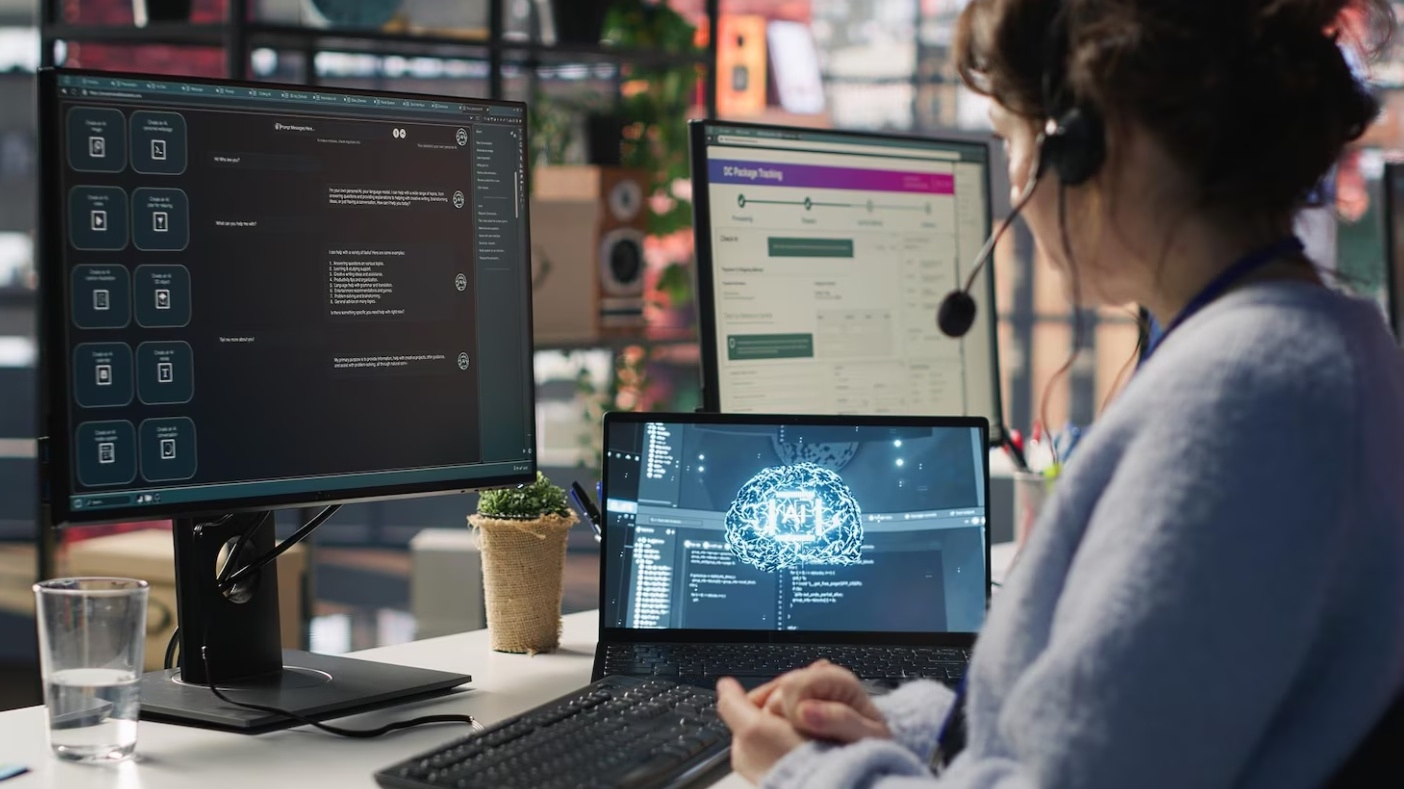
Modernizing a legacy system is never a purely technical exercise. It is a strategic decision that directly affects your revenue streams, operational resilience, compliance posture, and long-term ability to innovate.
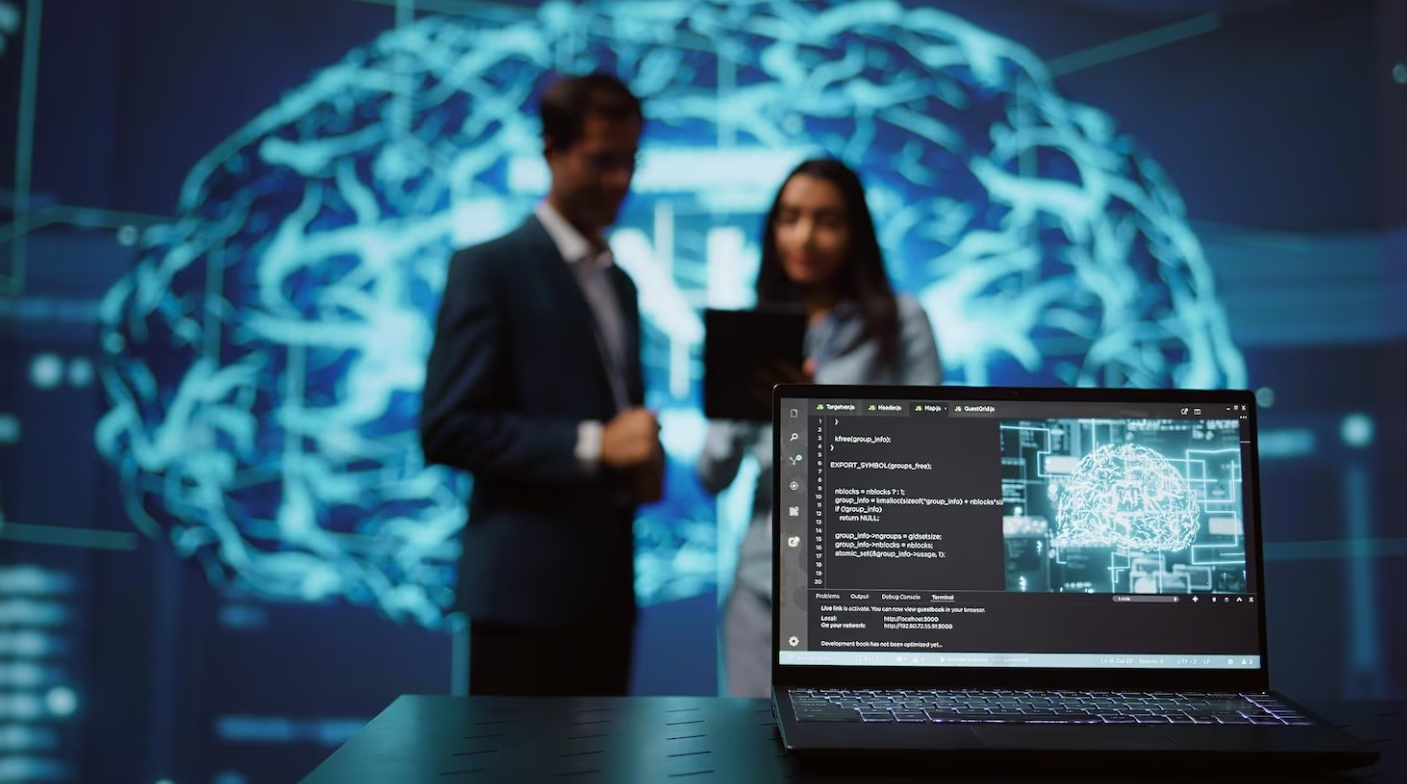
Legacy modernization is not a technology project. It is a business survival initiative disguised as engineering work. At SKM Group, we see legacy transformation as a controlled dismantling of risk
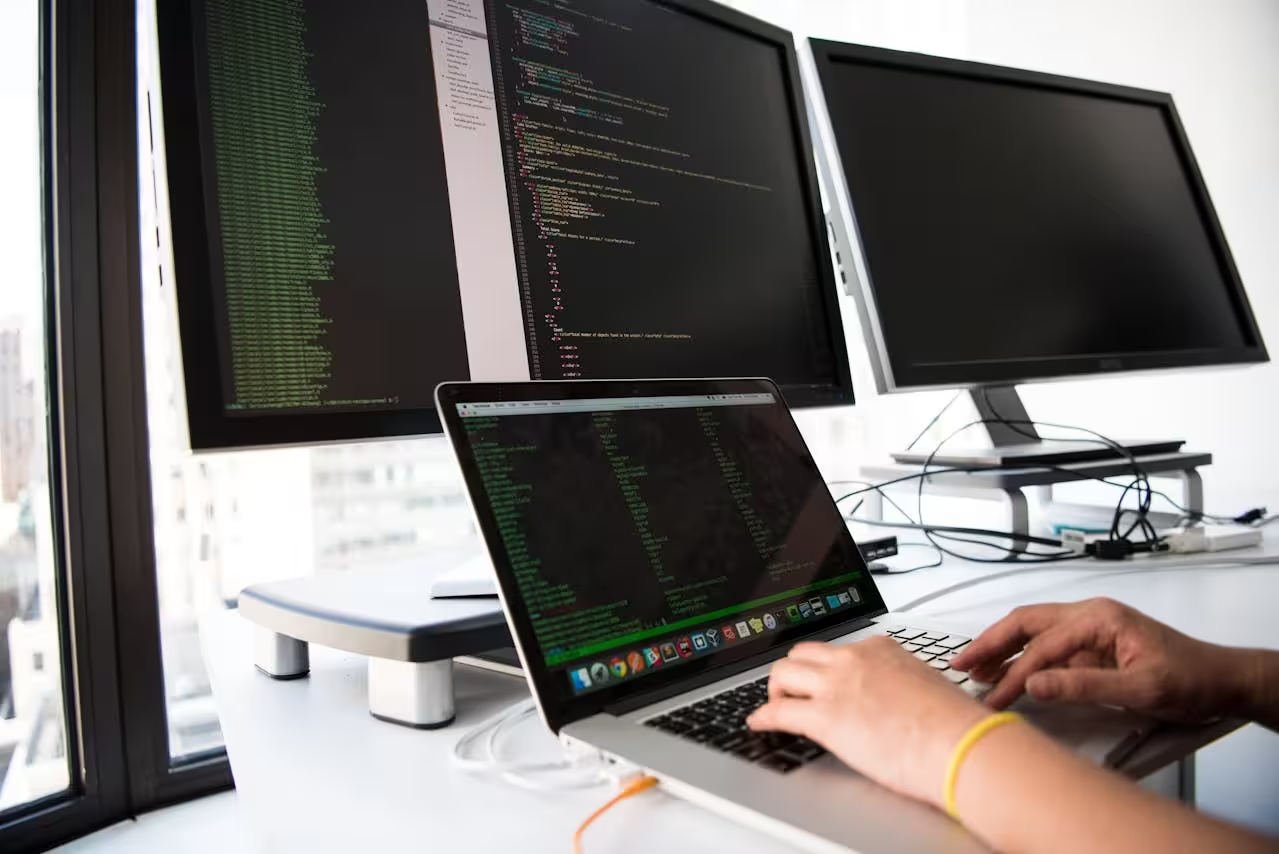
Legacy software modernization is often presented as a straight path from technical limitation to digital freedom. In reality, it is one of the most complex transformation efforts an organization can undertake.

When your software is intuitive, seamless, and genuinely pleasant to use, adoption rises, support costs drop, and your brand reputation grows stronger with every click.
Managing software today isn’t just about having the right tools–it’s about using them efficiently, legally, and strategically. In an era where cloud subscriptions, SaaS models, and hybrid deployments dominate IT ecosystems.
You already know your data is your business’s lifeblood. But the way you store, manage, and access that data can either accelerate your growth or quietly hold you back.

Legacy software modernization is the structured process of updating, transforming, or replacing outdated software systems to meet modern business needs.

Legacy software isn’t just “old code.” It’s a critical part of your business that’s grown increasingly fragile with time. Often custom-built and once state-of-the-art, your legacy systems likely hold together years of operational knowledge.

Modern business runs on software. But if your operations are still leaning on decades-old systems, you're probably feeling the drag. At SKM Group, we’ve worked with countless companies

Legacy software modernization refers to the process of updating, improving, or completely transforming outdated software systems - often referred to as legacy software
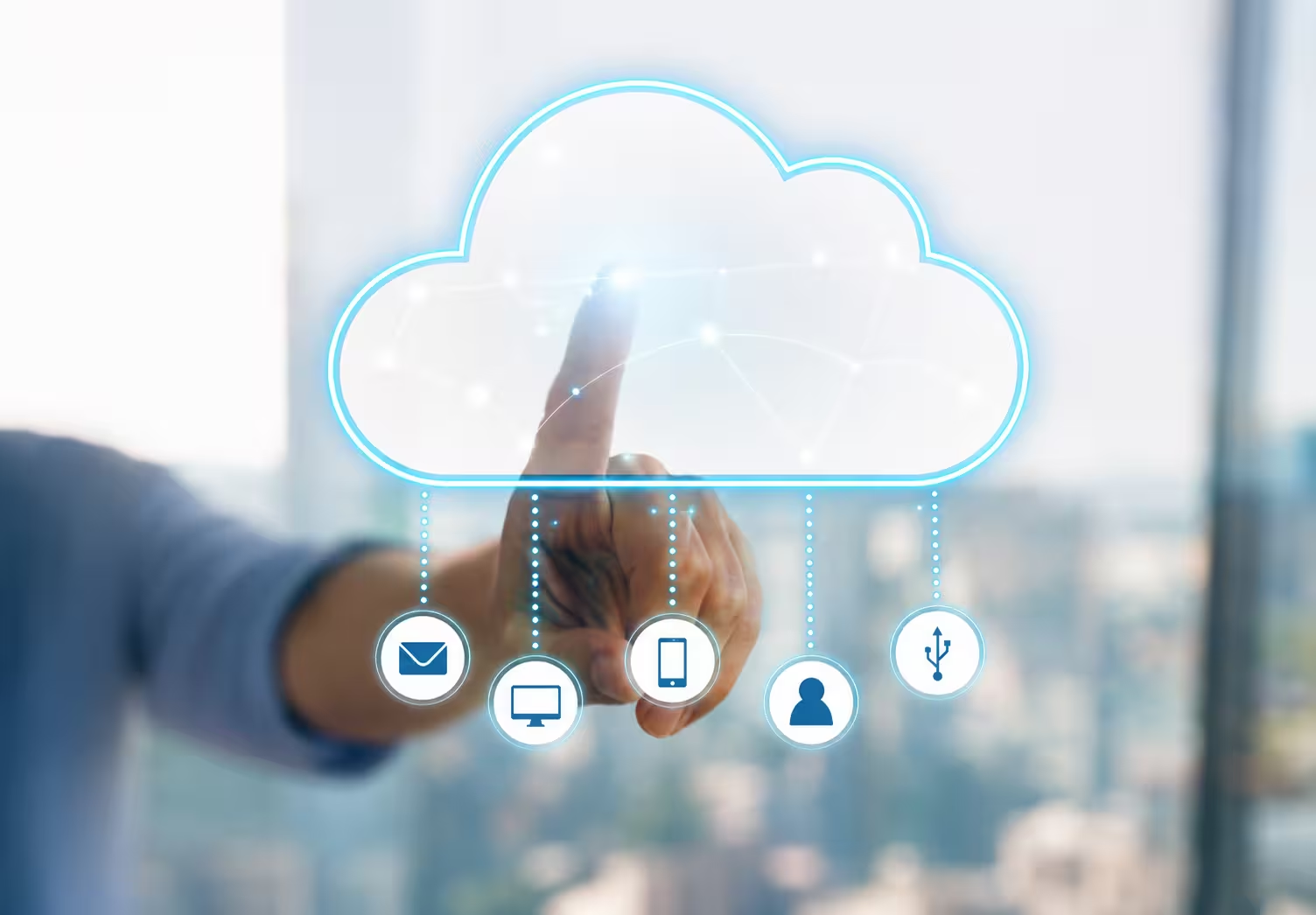
Cloud migration refers to the movement of applications, data, and other business entities from on-premise to a cloud-based environment. It can occur in public, private, or hybrid clouds based on your specific business needs and technical requirements

If you're leading a business in the digital age, you've likely heard about legacy software modernization. But what does it truly mean, and why is it such a hot topic in the tech world today?
%20(1).avif)
Businesses often face a key problem: integrating legacy systems with modern technology to keep operations agile and secure. At SKM Group, we understand that legacy system integration is not just about adopting new solutions but also about prese