

Is Your Organization Ready for IT Modernization?

The speed of change is ruthless. Systems that once powered your business can quickly become the anchors that hold it back. At SKM Group, we’ve seen this story unfold across industries: organizations that cling to outdated infrastructure struggle to keep pace with innovation, customer expectations, and operational efficiency. The question isn’t if you should modernize — it’s how ready you are for IT modernization.
IT modernization is not just an upgrade. It’s a transformation of your organization’s technological core — and, ultimately, its mindset. It’s about replacing rigid, legacy systems with flexible, cloud-native solutions that drive agility, scalability, and resilience. Let’s explore what it really means, why it matters, and how you can prepare to make it successful.
At its essence, IT modernization is the structured process of evolving your technology environment from outdated, siloed systems to connected, scalable, and intelligent ecosystems. It involves modernizing infrastructure, applications, and data management practices to support the dynamic needs of your organization.
This transformation can include cloud migration, automation, API integration, containerization, and the adoption of modern development frameworks. But beyond technology, IT modernization is about cultural evolution — shifting how your teams think about efficiency, security, and innovation. When your systems evolve, your entire business evolves with them.

Every modernization journey begins with a simple truth: what worked yesterday won’t necessarily work tomorrow.
Three primary forces push organizations toward modernization:
Together, these drivers create a business case that’s impossible to ignore. Modernization isn’t a luxury — it’s a survival strategy.
An effective IT modernization roadmap integrates technology, people, and process transformation. At SKM Group, we recommend treating modernization as an ecosystem strategy rather than a project with a start and end date.
A strong modernization plan typically includes:
Each component supports the others. When integrated properly, they form the foundation of a future-ready organization.
Boost your performance with trusted IT services from SKM Group.
Even the most visionary modernization projects can face roadblocks. Understanding these early is crucial to mitigating risk.
Organizations often struggle with legacy dependencies, budget constraints, and skill shortages. Data migration can be complex, especially when legacy databases use outdated schemas or undocumented integrations. Stakeholder misalignment and unclear objectives frequently derail timelines.
Another major pitfall is underestimating the cultural shift. IT modernization requires breaking long-held habits — embracing agile thinking, cross-functional collaboration, and a willingness to experiment. Without leadership buy-in and clear communication, resistance can quietly sabotage progress.
Recognizing these challenges upfront helps you plan for them, rather than react to them.
You can’t manage what you don’t measure. Defining clear Key Performance Indicators (KPIs) gives your modernization journey measurable direction.
The right KPIs vary by organization, but common benchmarks include:
KPIs transform abstract modernization goals into tangible outcomes, ensuring that every initiative aligns with business growth and ROI.
Modernizing your IT environment introduces not only opportunity but also compliance complexity. Every new system, integration, and data flow must comply with evolving regulations such as GDPR, HIPAA, or ISO 27001.
Security frameworks need to be redesigned to protect data across hybrid and multi-cloud environments. Access control, encryption, and data sovereignty policies become critical.
At SKM Group, we often advise our clients to embed compliance into the very fabric of their modernization strategy. By integrating governance and risk management early, you safeguard business continuity and build stakeholder trust — not after the fact, but from day one.
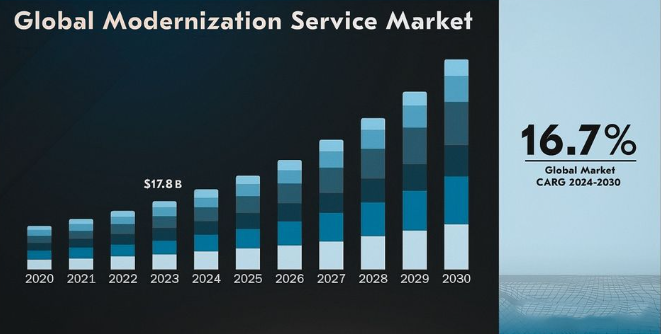
Your IT infrastructure modernization is the backbone of digital transformation. It determines whether your organization can scale quickly, innovate reliably, and respond effectively to disruptions.
Legacy infrastructure — whether physical servers, outdated networks, or monolithic systems — often hinders innovation. It consumes resources, slows collaboration, and limits access to modern tools like AI, IoT, or data analytics.
Modern infrastructure, on the other hand, creates new possibilities. It enables elastic scalability, centralized management, and cost transparency. It empowers your teams to deploy updates faster and leverage automation safely.
At SKM Group, we’ve observed that infrastructure modernization directly influences business outcomes. Companies that adopt hybrid or cloud-native models see measurable gains in agility, resilience, and customer experience.
Modernization isn’t about replacing hardware. It’s about enabling a smarter, more connected, and adaptable foundation that grows with your business.
Timing is everything in IT legacy modernization. Wait too long, and your organization risks operational bottlenecks and competitive disadvantage. Move too soon without a clear plan, and you may disrupt workflows unnecessarily.
The best moment to modernize is when your current systems start limiting your strategic ambitions — when integration becomes a burden, when security patches outnumber new features, or when your teams spend more time maintaining than innovating.
There are other telling signs: your infrastructure costs are rising faster than your revenue; your systems can’t handle new integrations; or your IT teams are overwhelmed by manual tasks. These are not just operational red flags — they’re strategic alarms.
The decision to modernize should always be data-driven. Conducting an IT modernization assessment can reveal the hidden costs of technical debt and help you prioritize initiatives by impact and feasibility.
When you treat modernization as an investment — not an expense — it transforms from a reactive fix into a proactive growth strategy.
A successful IT modernization roadmap is your strategic compass. It defines where you are, where you want to go, and how you’ll get there — without losing focus on your business goals.
At SKM Group, we approach modernization as a structured, iterative process that blends assessment, strategy, and execution. The roadmap should be living, evolving, and guided by both short-term wins and long-term vision.
Conducting an IT Modernization Assessment and Inventory
Every modernization journey starts with clarity. Before you change anything, you need to know what you have.
Begin by auditing your existing infrastructure, applications, and data repositories. Identify redundancies, bottlenecks, and systems that no longer align with your business needs. This step helps you map dependencies and understand the potential impact of every modernization decision.
A detailed inventory allows you to uncover hidden costs, such as maintenance overhead or security risks. It’s the baseline from which every modernization effort must evolve.
Defining Business Objectives and IT Modernization Goals
Modernization is not a technical vanity project. It’s a business initiative.
Define why you’re modernizing — whether it’s improving scalability, enhancing customer experience, reducing costs, or increasing compliance. These objectives must be concrete, measurable, and aligned with your organization’s broader strategy.
Without this alignment, even the best technical improvements will fall short of delivering business value. That’s why at SKM Group, we anchor every modernization initiative to tangible business outcomes, not technology trends.
Simplify management and improve results using our IT outsourcing.
Aligning Stakeholders Around Your IT Modernization Roadmap
Modernization succeeds when everyone rows in the same direction. Executives, IT teams, and business leaders must understand not only the technical rationale but also the business case behind IT infrastructure modernization.
Early alignment prevents scope creep, miscommunication, and resistance. It also builds accountability — because every stakeholder knows what success looks like.
Transparent communication, regular check-ins, and shared KPIs create trust and ownership across departments. When modernization becomes a shared mission, adoption happens faster and smoother.
Selecting Technologies for IT Infrastructure Modernization
Choosing the right technology stack is one of the most critical decisions in your IT modernization roadmap.
Modernization isn’t about chasing the latest trend — it’s about finding technologies that fit your operational and strategic context. Hybrid cloud architectures, containerized environments, API-first systems, and automation frameworks each have unique benefits.
At SKM Group, we help clients balance innovation with practicality. The right tech should enhance interoperability, security, and scalability — not complicate your environment. Remember: modernization is about progress, not complexity.
Establishing Timelines and Phased Roll-Out Plans
Rome wasn’t rebuilt overnight, and neither will your IT ecosystem be.
A phased rollout ensures stability while minimizing disruption. Start with pilot projects or low-risk systems to validate your approach, measure impact, and refine your methods.
Breaking your IT legacy modernization into manageable stages allows your teams to learn, adapt, and build momentum. Each milestone should bring visible improvement — whether through performance gains, cost reduction, or user satisfaction.
Small wins keep stakeholders engaged and help secure ongoing investment.
Governance, Budgeting, and Change Management
Even the most visionary strategy can fail without strong governance.
Establish clear ownership and decision-making structures. Define budgets not only for technology but also for training, risk management, and long-term maintenance.
Equally important is change management. Modernization changes how your teams work, think, and collaborate. Supporting them through training and transparent communication builds confidence and minimizes friction.
The human side of modernization is often overlooked — yet it’s what determines whether your transformation endures.
The success of IT modernization depends on leadership as much as technology.
Ideally, your modernization should be championed by a cross-functional team led by a Chief Information Officer (CIO) or Chief Technology Officer (CTO), supported by both IT and business leaders.
At SKM Group, we emphasize the role of a “Modernization Leader” — someone who bridges business strategy with technical execution. This leader ensures that every modernization effort supports broader company objectives, balancing innovation with operational stability.
However, leadership isn’t limited to titles. It’s about vision, communication, and the ability to inspire alignment. The right leadership transforms modernization from a technical initiative into a strategic movement.
Not all modernization paths are created equal. Certain solutions offer faster ROI and scalability.
Key accelerators include cloud migration tools, low-code development platforms, container orchestration systems like Kubernetes, and AI-driven analytics frameworks. Automation platforms streamline workflows and reduce manual overhead.
At SKM Group, we integrate these tools to create tailored modernization blueprints that fit your infrastructure maturity and business objectives. The goal isn’t to replace everything — it’s to modernize with precision, ensuring interoperability, compliance, and resilience.
Modernization done right turns your infrastructure into a living, breathing system that evolves with your business.
Executing IT legacy modernization is about balancing innovation with control. It’s a dance between speed and precision — modernizing fast enough to stay competitive, yet carefully enough to avoid disruption.
Let’s explore the practices that separate successful transformations from costly missteps.
Incremental Refactoring vs. Full Rebuild Approaches
Modernization isn’t binary. You don’t have to choose between total system replacement and doing nothing.
Incremental refactoring — updating systems piece by piece — allows for controlled evolution, minimizing risk. A full rebuild may be necessary for deeply outdated or incompatible systems but comes with higher cost and complexity.
At SKM Group, we help clients assess which approach delivers the best value. The key is aligning the technical path with your organization’s tolerance for risk, disruption, and speed.
Maintaining Service Continuity During IT Legacy Modernization
One of the greatest fears during modernization is downtime. Customers and employees expect uninterrupted access to critical systems.
To mitigate this, plan redundancies, backup environments, and rollback procedures. A well-orchestrated modernization ensures your business never skips a beat — even during migrations or deployments.
Resilience is not optional; it’s a core success factor.
Implementing Robust Data Migration and Validation
Data is your organization’s most valuable asset — and the most vulnerable during transformation.
Establish a structured data migration strategy that includes validation, cleansing, and reconciliation at every stage. Automate where possible to reduce human error.
A successful data migration doesn’t just move information; it enhances quality, accessibility, and compliance across your ecosystem.
Turn digital ideas into reality with innovative custom software development.
Training Teams on New IT Infrastructure Modernization Tools
Technology alone doesn’t drive transformation — people do.
Your teams need training and guidance to navigate new platforms, workflows, and processes. Empower them to experiment, learn, and innovate.
At SKM Group, we often conduct joint enablement sessions that bridge technical training with real-world use cases, helping teams quickly apply new capabilities to business outcomes.
Continuous Monitoring and Performance Tuning
Modernization isn’t a finish line — it’s an ongoing commitment.
Implement monitoring tools and analytics dashboards to track system health, performance, and user experience. Use these insights to optimize continuously.
Organizations that treat modernization as a continuous process gain an advantage: they evolve faster than competitors stuck in “project mode.”
Post-Modernization Support and Optimization
After implementation, the real work begins.
Post-modernization support ensures your systems remain stable, compliant, and scalable. Continuous optimization identifies new efficiency opportunities and keeps your infrastructure aligned with business growth.
Think of it as digital stewardship — the ongoing responsibility to ensure your IT investments keep delivering value.

Modernization is more than a technical transformation — it’s a strategic imperative.
By embracing IT modernization, your organization gains the agility to innovate, the scalability to grow, and the security to compete in an unpredictable market. It’s not about keeping up with technology — it’s about shaping your future with it.
At SKM Group, we believe that modernization is not a one-time effort but a mindset — a continuous journey toward smarter, faster, and more resilient operations.
The question isn’t whether you can afford to modernize. It’s whether you can afford not to.

Start with an assessment of your current infrastructure, applications, and data systems. Identify pain points, dependencies, and opportunities for improvement before defining your IT modernization roadmap.
Legacy upgrades address individual systems or components. IT infrastructure modernization redefines the entire architecture — aligning technology with long-term business goals, not just short-term fixes.
Usually a CIO, CTO, or cross-functional modernization leader — someone who bridges business strategy with technical execution.
Cloud platforms, containerization, API management, automation, and AI-driven analytics — technologies that enhance agility, reduce costs, and drive innovation.


In our team, Dominik Bigosiński is responsible for driving the growth of online businesses through the strategic use of content. As an expert in his field, he has collaborated with organizations from the US, UK, Norway, and Poland since 2018, contributing to the development of over 100 blogs and supporting more than 450 B2B and e-commerce brands worldwide. His passion for conscious personal growth and philosophy is reflected in his work, where he focuses on delivering thoughtful, audience-centered strategies that drive long-term results.
Hire our experienced IT experts. Flexible, effective, and ready to start.
Discover moreStrategic insights into technology, software development, and digital growth

At SKM Group, we often tell our clients that building software is only the first chapter of the story. The rest of the book is the software maintenance process—the continuous effort required to keep your system healthy, secure, scalable.
The speed of change is ruthless. Systems that once powered your business can quickly become the anchors that hold it back. At SKM Group, we’ve seen this story unfold across industries.

Technology moves fast. Your clients move faster. And when systems stop working, even for a moment, your business feels the weight instantly. That’s where an IT Helpdesk becomes.

When you're steering a tech-driven business, every dollar invested in software must work harder and smarter. Outsourcing lets you harness global expertise while minimizing overhead and accelerating delivery timelines.

If you're evaluating how to accelerate digital initiatives while staying lean, software development outsourcing delivers a precise answer. By partnering with external experts, you tap into specialized skills and proven delivery processes

Nearshore Software Development Outsourcing is the strategic delegation of software engineering tasks to external teams located in neighboring or nearby countries. It’s not just about saving money—it’s about alignment.

Evaluate an outsourced development team for your legacy stack. Cut sprint delays, reduce IT overhead by 30%, and integrate .NET engineers in 6 weeks..

Software Development Nearshore refers to outsourcing your software projects to teams in neighboring or nearby countries. It's a model that balances cost-efficiency with strategic proximity.

Software outsourcing means handing over your software development to an external partner, often located in another country or region. It’s not just about cutting costs—although that's a common reason.

In 2025, selecting the right Software Development Outsource Company is no longer just a matter of cost—it's a mission-critical decision that impacts scalability, security, and competitive edge.

Every modern business relies on technology to stay competitive. But maintaining IT infrastructure, security, and efficiency in-house can be overwhelming and costly. This is where Managed Services in IT come in.

By outsourcing IT operations and infrastructure management to expert providers, companies can focus on their core business activities without the burden of handling complex IT tasks internally.

Technology is the backbone of modern business, and Managed IT Services have become the key to maintaining a secure, efficient, and scalable IT environment. Whether you run a small startup or a global enterprise, Managed IT Service Providers offer.

As a small business owner, you likely wear many hats. From managing operations to driving growth, your plate is always full. That’s where IT outsourcing for small businesses comes in—a strategic solution to offload technical responsibilities

Properly selecting a web development company is one of the most important decisions you must make, significantly affecting your project's success. In the US alone, there are approximately 4.3 million software houses;

Discover the world of .NET development in this comprehensive guide. Learn what a .NET developer does, the skills needed, and the importance of .NET technology in building scalable and reliable applications.

Discover effective strategies for managing IT costs in a rapidly changing technological landscape. Learn how flexible budgeting, forecasting, and prioritizing investments can help businesses save money while enhancing profitability and competitivenes

Discover why soft skills are as vital as technical expertise for programmers. Explore the growing importance of communication, collaboration, and empathy in software development.

Explore the pros and cons of desktop, remote, and hybrid work models in the IT industry. Learn how these models impact productivity, employee satisfaction, and competitive advantage, with a focus on IT outsourcing and custom software development.

Discover the environmental impact of the IT industry, from carbon emissions and energy consumption to raw material extraction and e-waste. Learn how sustainable practices can mitigate these effects, leading to a greener digital future.

Navigating remote work and IT outsourcing? Discover how to leverage the cultural and geographic diversity of international teams to drive innovation while addressing common challenges.

Inclusive software enhances user engagement and promotes a positive brand image, making it a strategic business asset. Create inclusive software designs that cater to all users, regardless of their abilities, age, or cultural background.

Discover how IT outsourcing revolutionizes HR management, enhancing agility and efficiency. Explore benefits like cost reduction, access to global talent, and streamlined processes.

Discover the importance of accurate technical skills assessment in IT recruitment. Explore methods like technical interviews, online tests, live coding, and homework assignments.

Explore the role of soft skills in diverse IT roles, from programming to client interactions, and learn how they contribute to effective collaboration, innovative problem-solving, and lasting client relationships.

Learn best practices for managing your IT outsourcing team and turning challenges into growth opportunities. Learn about the different types of outsourcing contracts
.avif)
Ready to revolutionize your IT strategy? Learn the top 5 factors for choosing the perfect outsourcing partner. How can understanding your business needs drive IT success? Who are the key players in the global IT outsourcing market?

In the tech world, companies often face a common problem - employees leaving. This is especially tricky when it comes to IT developers. As the need for specific skills grows and the competition for the best IT experts gets tougher.

In the dynamic landscape of software creation, where innovation and efficiency are paramount, the concept of IT outsourcing has emerged as a strategic alternative that's catching the attention of businesses worldwide.
.avif)
In the landscape of the software industry, the success of a business hinges on its ability to assemble the right team with the right skills.One of the questions on every tech entrepreneur's mind: how do you get the best talent on board?

Comments