


Polish Soccer Skills is one of the most recognizable training projects for children and young people in Poland. For years, it has been organizing camps, day camps, and development programs covering various locations, dates, and skill levels. The scale of the project has a direct impact on the scale of the booking processes.
Before we started work, we analyzed the existing registration system. We saw a solution that was functionally complex but difficult to use on a daily basis. Parents had to go through many steps, fill out long forms, and use a limited number of payment methods. Each additional step increased the risk of abandoning the reservation.
According to data from the Baymard Institute, the average cart abandonment rate on websites exceeds 70%. In industries based on forms and one-time payments, this problem becomes even more apparent. That is why we focused on simplifying the process without losing administrative control and data quality.
From a design perspective, the most important user of the system was the parent or legal guardian. They are the ones who make the decision, are responsible for payment, and provide the child's data. Already at the analysis stage, we made one assumption: the user should not have to think about what to do next.
We focused on the following areas:
Research by the Nielsen Norman Group shows that users need less than 10 seconds on average to assess whether an interface is understandable to them. If uncertainty arises during this time, the risk of interrupting the process increases. The above data became one of the reference points when designing the new solution.
When designing the new system, we focused on logically dividing the entire process into clear stages. From the very beginning, the user can see what stage they are at and how many steps remain to complete the booking. This structure reduces decision-making stress and builds a sense of control.
We divided the process into the following stages:
Each stage has been designed to function independently while maintaining visual and logical consistency with the system as a whole.
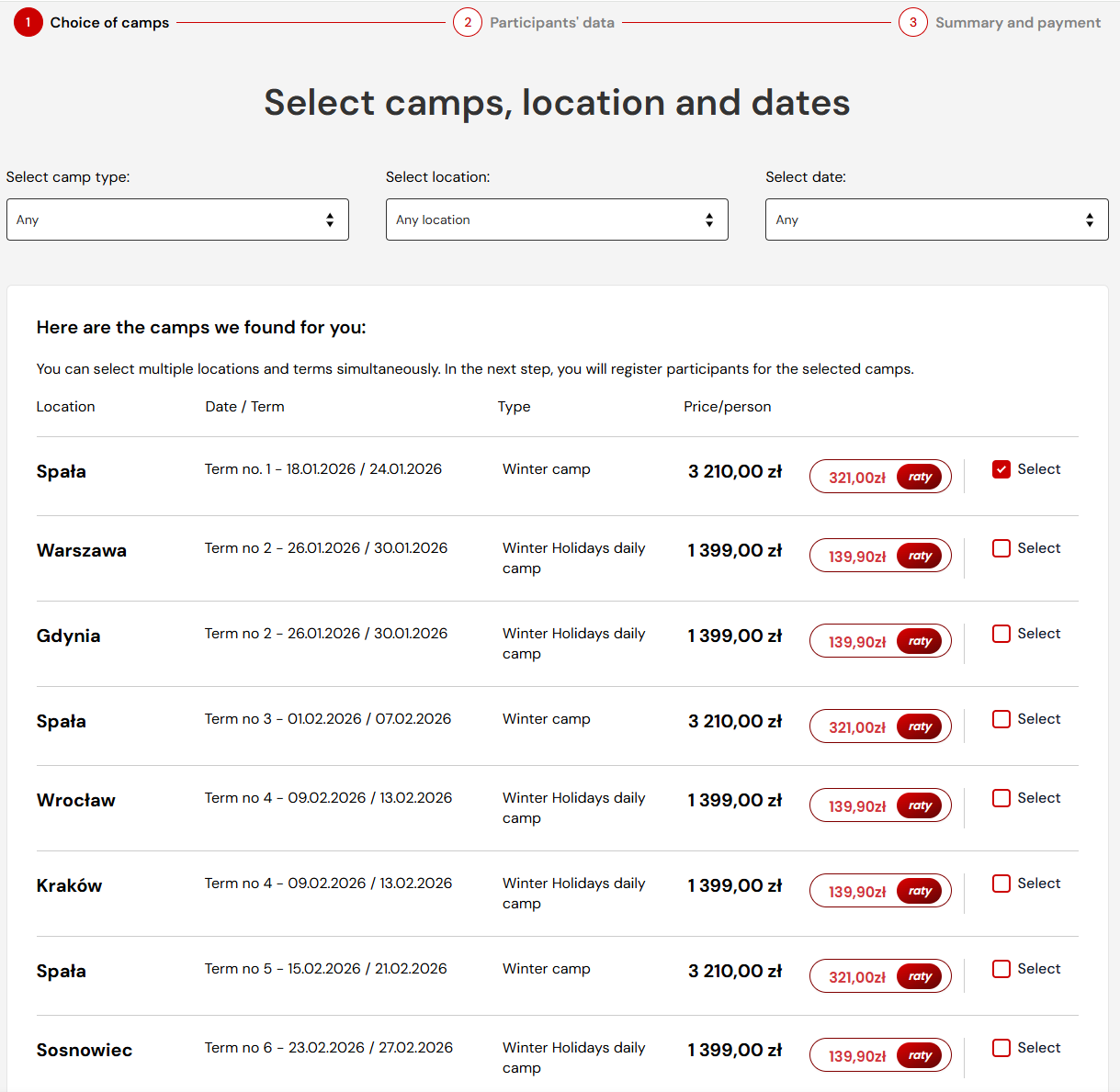
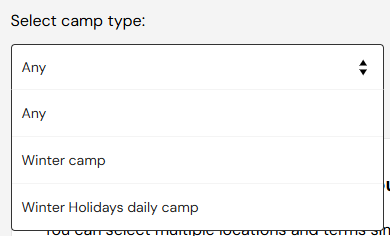
The first screen of the system is a list of available camps. The user can filter by camp type, location, and date.
Camp type:
Location:
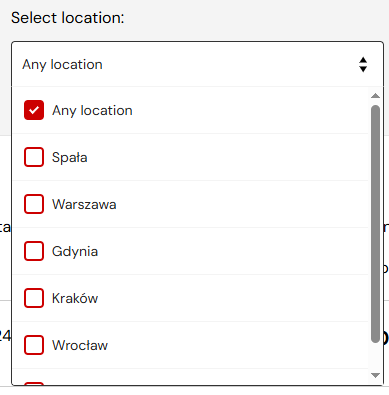
In this case, we have used solutions known from booking services, but adapted to the specifics of sporting events.
Each item on the list contains:
We wanted users to be able to compare offers without going into details.
Forms are one of the most common sticking points in booking processes. Too many fields are discouraging. On the other hand, too few cause operational problems for the organizer.
Our goal was to find a balance.
So we introduced logical data grouping:
Each section has a clear heading and a brief explanation. Fields requiring special attention are visually highlighted without the use of aggressive messages.
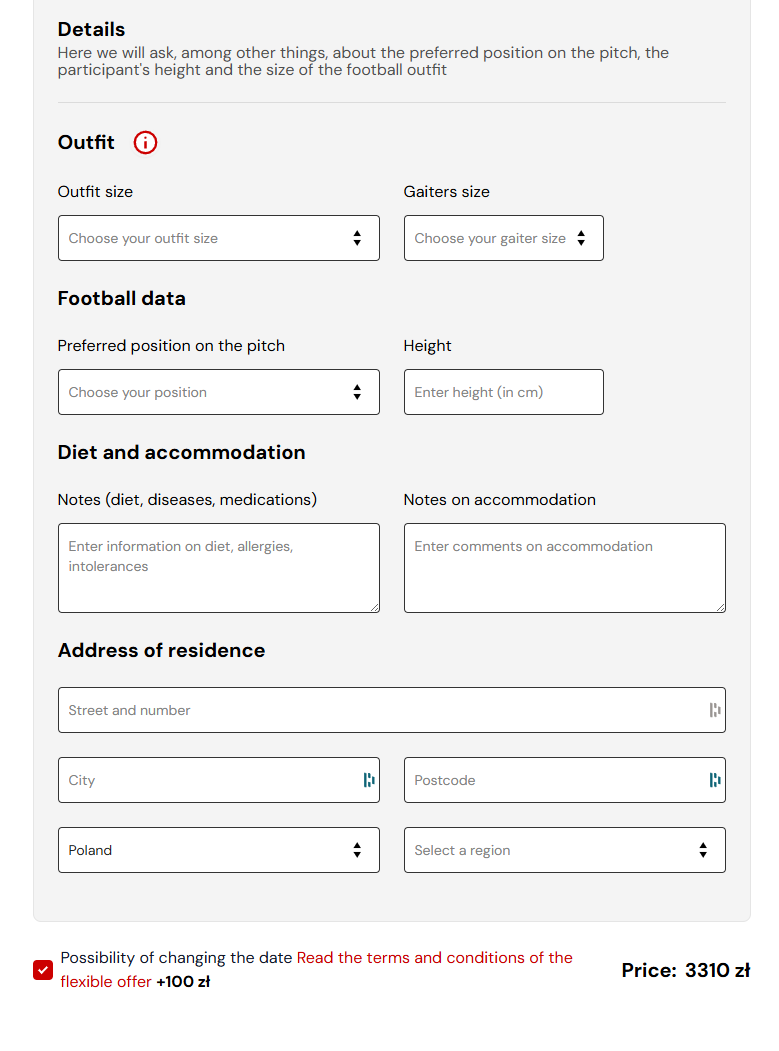
The participant data screen is one of the more complex areas of the Polish Soccer Skills booking system. The user fills in the child's first name, last name, date of birth, and gender. In addition, we have included an option to provide information about whether the child has a complete sports outfit, which directly affects the final price.
The rest of the form contains detailed information:
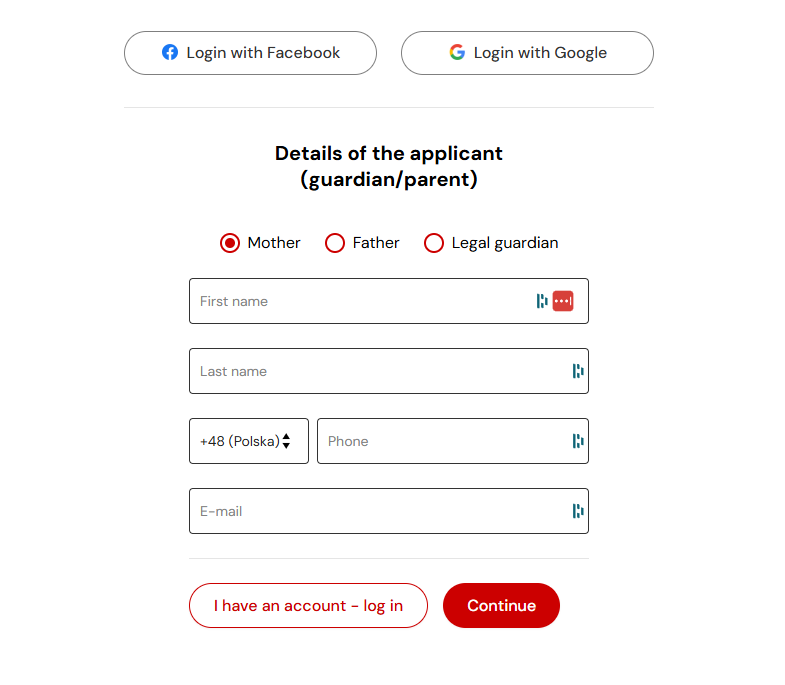
One of the important decisions was to enable reservations without creating an account. Users can log in with an existing account or continue as a guest. This solution significantly reduces the time needed to complete the registration process.
For those who have an account, we have provided a classic login with the option to remember their details. For new users, the guardian data form appears at a natural point in the process, without the need for prior registration.
Our actions were based on a significant reason. Research provided by Storyly shows that mandatory registration before purchase is one of the most common reasons for abandoning forms. The use of guest mode reduces this phenomenon without compromising data security.
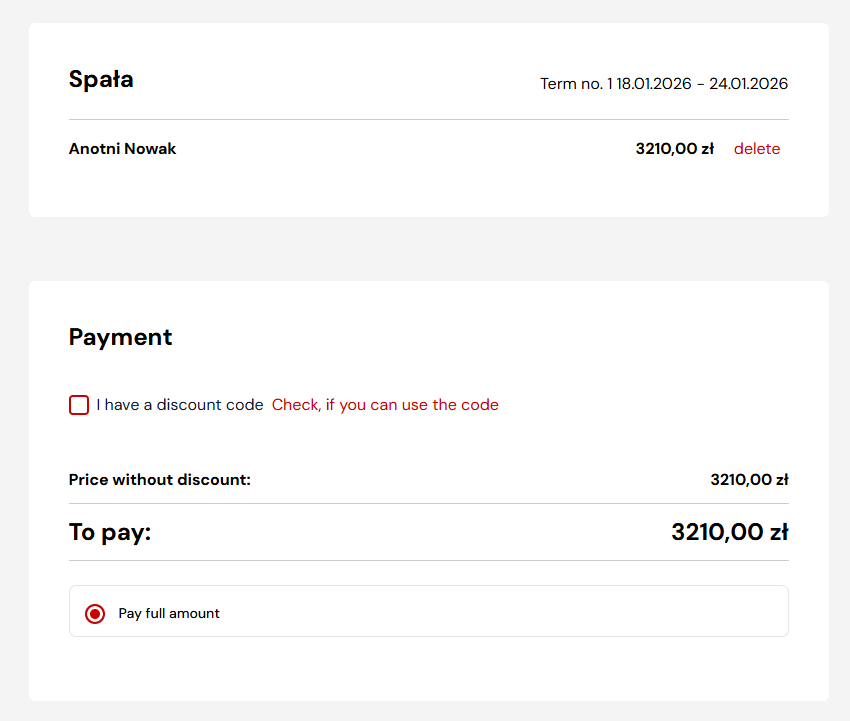
In this case, parents receive a clear summary of costs before choosing a payment method. The base price, any additional fees, and discounts are visible in one place, without the need to scroll and search for information in the terms and conditions.
We have integrated Przelewy24, which allows for various forms of payment. The system supports full, installment, and advance payments. Our goal was to provide greater financial flexibility for families and reduce the risk of cancellation at the finalization stage.
The summary screen serves several functions at once. On the one hand, it closes the decision-making process, and on the other, it organizes all the information collected earlier.
What does the user see?
Each payment method is clearly labeled with a name and graphic symbol. In addition, the required consents and declarations are placed in a logical location without interrupting the continuity of the process.
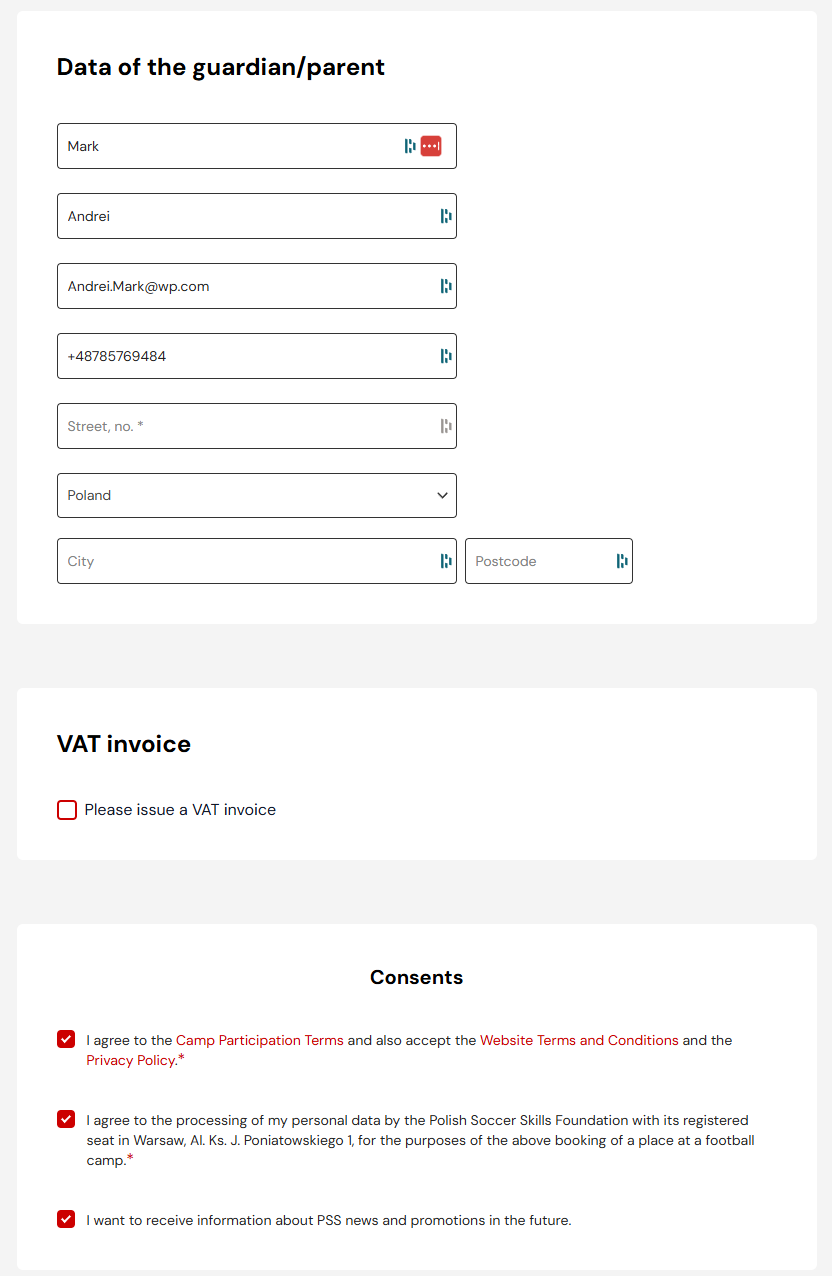
The guardian data screen has been designed to comply with applicable data protection regulations. The form contains the necessary contact fields and a consent section, clearly described and easy to understand.
We paid special attention to the clarity of the legal content. The consents are not hidden in long blocks of text, but divided into logical sections. The user knows exactly what they are consenting to and for what purpose the data will be processed.
According to a report by the Personal Data Protection Office, lack of transparency in consent is one of the most common reasons for user complaints. That is why we treated this stage with exceptional care.
One of the most important elements of the new system was the automation of communication. After completing the booking, the user receives a confirmation message with a complete set of information. Subsequent messages inform about the payment status, remind about subsequent installments, and enable the download of necessary documents.
From the organizer's point of view, this solution reduces the number of email and phone inquiries. From the parent's perspective, it gives a sense of order and control over the entire process.
The automated messages are simple and easy to understand, without excessive formal language. They contain specific information, dates, and contact details, without unnecessary embellishments.
Customers who have made a reservation by creating an account can view their orders after logging into their profile, including how much they have paid in advance and how much remains to be paid.
The booking system does not end with the user form. An equally important element is the administrative backend used by the Polish Soccer Skills team. Already at the design stage, we knew that the panel had to be intuitive and error-resistant.
Administrators were given access to:
As a result, managing registrations does not require manually checking messages or spreadsheets. All information is in one place and is updated in real time.
In terms of additional features, we would like to highlight the following:
The booking system has been prepared in two language versions: Polish and English. This is a response to the growing interest in camps from participants outside Poland and families living abroad.
We have used a uniform content structure in both language versions, ensuring consistency in terminology and style. It was also important to maintain readability on different devices and to adjust the contrast and text size to the basic principles of digital accessibility.
The new booking system was implemented and quickly became the primary tool for registering for camps and day camps. The most important effects were noticeable both on the part of users and the organizational team.
From an operational perspective, the system streamlined processes, reduced the time needed to process a single booking, and reduced the number of errors resulting from manual data processing. On the user side, the clarity and comfort of the entire process improved.
Although not every effect can be measured in numbers, some of the changes were clearly noticeable:
The work on the booking system for Polish Soccer Skills was an example of a project in which technology served as a tool rather than an end in itself. The most important decisions were made at the intersection of user needs, organizational realities, and data responsibility.
This project confirmed that a well-designed booking system:
From the team's perspective, it was a job that required attention, analysis, and consistency in decision-making. The result shows that simplicity does not mean sacrificing functionality. On the contrary, it is often the best expression of it.
Would you like to receive an individual quote for an application or reservation system project? Contact SKM Group! We design our solutions based on the latest data!

Modern booking systems integrate with payment providers through APIs, enabling fast payments, deposits, installment plans, and automatic transaction status updates.
A well-designed form structure helps reduce errors, simplify data validation, and increase booking completion rates.
Automated emails and notifications allow users to instantly receive information about payments, booking statuses, and documents without involving customer support.
Modern booking systems typically use API-based architecture, payment gateway integrations, real-time databases, and responsive frontend interfaces optimized for mobile devices.


In our team, Dominik Bigosiński is responsible for driving the growth of online businesses through the strategic use of content. As an expert in his field, he has collaborated with organizations from the US, UK, Norway, and Poland since 2018, contributing to the development of over 100 blogs and supporting more than 450 B2B and e-commerce brands worldwide. His passion for conscious personal growth and philosophy is reflected in his work, where he focuses on delivering thoughtful, audience-centered strategies that drive long-term results.
Like what you see? Let's talk about how we can help your business achieve its goals.
Discover moreStrategic insights into technology, software development, and digital growth
Discover how we transformed a complex registration process into a seamless, mobile-first booking engine for Polish Soccer Skills. See the design decisions and automation tools that reduced cart abandonment and simplified camp management at scale.

Discover how we helped the Hutchinson Group, a global leader in transportation solutions, transform their analog quality control into a fully automated digital system using vision-based product verification.

Custom Chrome plug-in from SKM Group revolutionizes report management in beauty salons by automating and optimizing processes in Versum. The article discusses the challenges of manual reporting, the plug-in's features, and the benefits

Automate your inventory management and expand your sales channels effortlessly! Our client faced challenges integrating their vast inventory with Allegro, Poland's top marketplace, due to their existing system's limitations.

In the IT industry, project pricing can be a time-consuming challenge. Our innovative tool streamlines the process, allowing for accurate quotes, scope analysis, and time management.

Discover SKM Group's expertise in EU-funded IT projects, from innovative mobile platforms to personalized customer experiences. Explore how our support, from proposal writing to implementation, leverages EU funds to drive IT industry growth

Explore how our collaboration with an international automotive parts manufacturer led to the development of an innovative quality assessment system. Learn how our client experienced significant benefits and including scrap reduction.

Based on the Umbraco v7 system, the appearance of the online store for Verge Sport company has been updated. The main tasks included expanding the editing capabilities from the administrative panel and optimizing the platform's speed.

In today's digital era, a well-functioning online store has become a crucial tool for companies looking to sell their products or services. For the Polish company Krosno S.A, we created a modern online store based on the PlentyMarkets system.

In the modern manufacturing sector, where the pace of change and growing customer demands are on a daily basis , efficiency and process optimization have become key factors determining success.


Comments