


In 2026, software outsourcing isn't just a cost-cutting tactic - it's a strategic lever for growth. For decision-makers, choosing the right software outsourcing provider means gaining access to specialized skills and accelerating digital transformation without the overhead of in-house recruitment. It’s not just about cutting costs - although that's a common reason. It’s about gaining strategic access to specialized skills, technical expertise, and delivery speed through professional IT outsourcing services that may not exist in your in-house team.
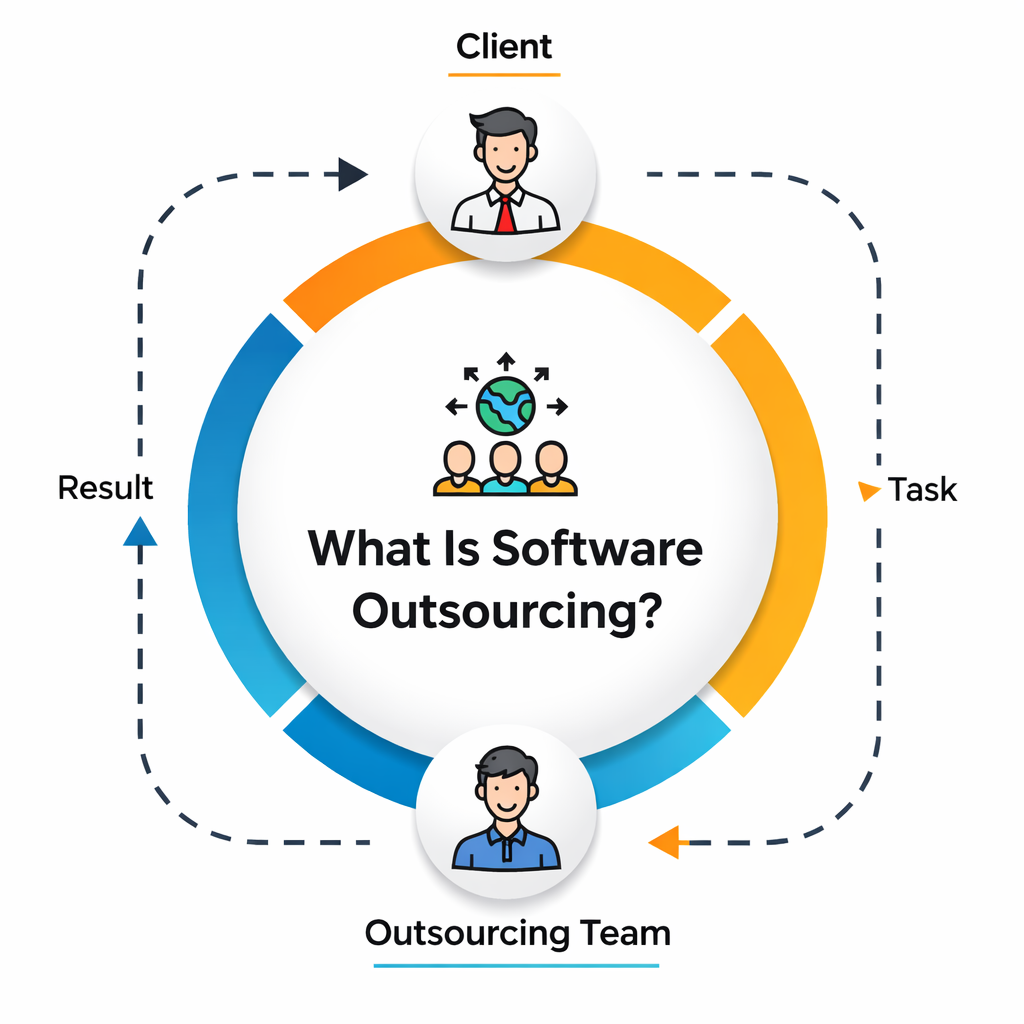
Definition: Software Outsourcing is the business practice of hiring an external company or managed teams to design, develop, maintain, or scale software solutions instead of using in-house resources.It allows organizations to access specialized expertise, reduce operational costs, accelerate time-to-market, and focus internal teams on core strategic activities.
At SKM Group, we define software outsourcing as a growth lever. When you outsource, you're not giving up control—you’re scaling intelligently. You’re filling talent gaps, streamlining development cycles, and focusing your internal resources where they matter most. And you're doing all of this without carrying the overhead of hiring full-time developers for every phase of your digital roadmap.
Outsourcing software development is a full-cycle process. It doesn’t begin with coding, and it doesn’t end with delivery. It begins with strategy—defining your needs, timeline, and budget. Then comes vendor selection, contracting, onboarding, and ongoing management.
Here’s what typically happens when you engage with software development outsourcing services like SKM Group:
You don’t just hire developers. You build a cross-functional team that operates like your own.
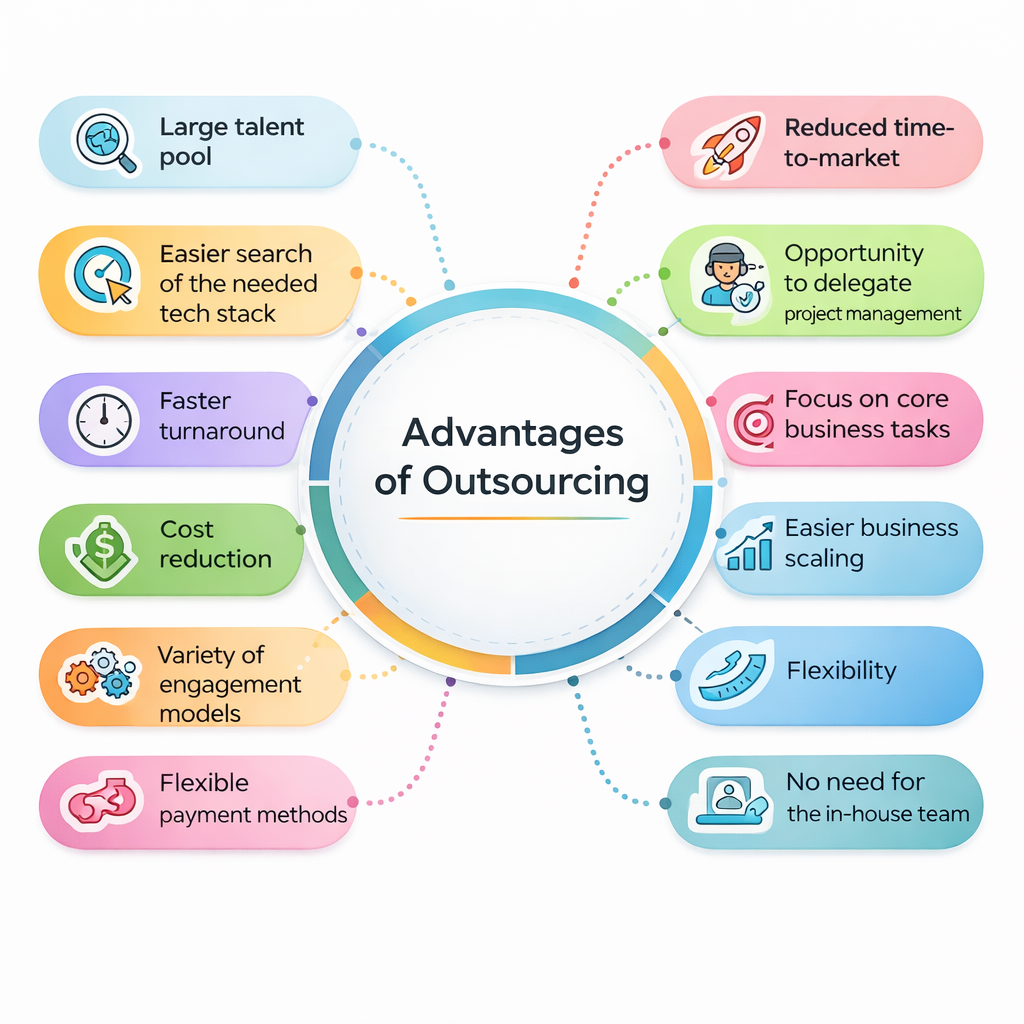
Outsourced software is no longer a shortcut—it’s a standard. And when done right, it offers transformative benefits.
For one, it unlocks faster go-to-market times. You reduce the time it takes to turn an idea into a working product because you're leveraging ready-to-go teams for custom software development.Then there's the strategic cost-efficiency. You're not investing in recruitment, training, or retaining full-time employees for roles that may be project-specific.
But the true power lies in flexibility. Whether building dedicated applications from scratch or scaling existing ones, outsourcing empowers you to adapt on demand.You focus on product and customer experience. Your outsourcing partner takes care of velocity, engineering health, and innovation cadence.
Let’s address the elephant in the room—cost savings. Yes, outsourcing is often more affordable than hiring in-house teams. But the real benefit isn’t just about cutting payroll—it’s about resource optimization.
With outsourcing software development, you convert fixed costs into variable ones. Instead of paying full-time salaries, benefits, and overhead for roles you don’t need permanently, you allocate budget only when and where it’s needed most.
You're also avoiding hidden expenses: recruitment cycles, employee churn, onboarding delays. And since you’re working with experts, you’re paying for quality delivery—not rookie mistakes.
Talent isn't bound by geography anymore. When you outsource software development, you’re no longer limited to your local market. You access engineers who’ve built similar platforms, solved complex infrastructure challenges, and delivered products at scale—across industries and time zones.
At SKM Group, we’ve built a distributed talent network that gives you direct access to world-class developers, UX designers, DevOps engineers, and AI specialists. You tap into curated expertise instantly, without months of hiring cycles.
This global reach gives you a competitive edge. You gain skills your competition is still scrambling to recruit.
Time kills more software products than poor design ever will. In today’s fast-paced digital economy, being first often beats being perfect. Outsourcing accelerates your development timeline by removing staffing bottlenecks and adding parallel capacity to your roadmap.
Instead of waiting months to staff a team, you get started in weeks. Your outsourced squad works in sync with your product managers, iterating quickly, shipping often, and course-correcting as needed.
Faster doesn’t mean sloppier. It means smarter sprints, better planning, and more velocity—without compromising quality.
Scalability and Flexibility in Development Projects
Product roadmaps are rarely linear. What you need today may not be what you need next quarter. That’s where outsourcing gives you superpowers: scalability and flexibility.
Need to ramp up QA before a big launch? Done. Need to scale down front-end development during a feature freeze? No problem. With a partner like SKM Group, you shape your team dynamically to match the project’s real-time needs.
You’re no longer locked into rigid org charts. You’re building lean, adaptive teams that evolve with your product.
Choosing the right geography is as critical as choosing the tech stack. While offshore models (Asia) often offer the lowest rates, they can come with communication lag, significant time zone gaps, and cultural friction that slow down delivery.
Nearshore software outsourcing (e.g., to Poland) provides the perfect balance for Western European and US-based companies: top-tier engineering talent, full cultural alignment, and overlapping working hours. This proximity is essential for real-time Agile collaboration and high-velocity development cycles.
The engine behind modern software development outsourcing services is operational excellence. At SKM Group, our services are designed to integrate seamlessly with your workflows, tools, and milestones.
We operate using agile delivery models with dedicated product owners, scrum masters, and QA leads. We bring in cross-functional squads tailored to your domain—fintech, healthtech, e-commerce, SaaS, you name it. You get complete transparency through daily standups, sprint planning, and real-time dashboards.
See how this works in practice in our logistics software examples.
Modern outsourcing isn’t about offloading tasks—it’s about co-building, with shared accountability and proactive collaboration.
Discover how SKM Group’s IT services can be the backbone of your digital growth: Explore our IT services.
Timing matters. Too early, and you risk relying on outsourcing before internal alignment. Too late, and you might already be burning capital inefficiently.
So when should you invest in an outsourcing strategy? Here are some clear triggers:
If any of those sound familiar, outsourcing isn’t a workaround—it’s your next best move.
So what separates the best software outsourcing partners from the rest? It’s not just about code quality. It’s about business alignment, technical depth, and the ability to communicate clearly under pressure.
A top-tier outsourcing provider like SKM Group offers:
In short, it’s about trust, delivery, and cultural fit. The right partner doesn’t just code your app—they think like your CTO.
Every outsourcing region has its strength. Understanding these nuances can make or break your project.
Asia (especially India and the Philippines) is ideal for large-scale, cost-sensitive development—particularly in enterprise systems. Eastern Europe, including Poland, Romania, and Ukraine, excels in high-skill engineering, complex system design, and data science. Latin America offers strong cultural alignment and time zone proximity to U.S. clients, making it a favorite for nearshoring agile projects.
SKM Group, headquartered in Europe, works with hybrid teams from both Eastern Europe and Latin America to give you the best of both worlds—skill depth and cultural alignment.
Let’s talk real-world results from our successful projects.
A fintech client approached us with a half-built platform, a burned-out internal team, and a ticking clock before demo day. Within two weeks, SKM Group assembled a team, rewrote core modules in Go, integrated with Plaid and Stripe, and launched a stable beta. They raised $2M the following quarter.
In another case, a healthtech startup needed an MVP in under 90 days. We delivered the backend in Django, frontend in React, and CI/CD with Docker and GitHub Actions. They’re now scaling with us long-term.
These aren’t exceptions. They’re what happens when execution meets experience.
Don’t get dazzled by pitch decks. Evaluate software outsourcing companies based on:
Ask yourself: would I trust this partner with a mission-critical launch? If the answer isn't a clear yes, keep looking.
Before you hire anyone, ask yourself: What problem am I really trying to solve?
Is it a speed issue? A talent gap? A cost challenge? Your answers define the kind of outsource software development services you actually need.
SKM Group starts every engagement with a strategic alignment session. We don’t just throw resumes at you. We diagnose, recommend, and build a solution tailored to your tech stack, culture, and business objectives.
You wouldn’t hire a CFO without checking their track record. The same logic applies here.
A serious outsourcing partner should be able to show you:
Don’t settle for vague claims. Dig into real work. At SKM Group, we’re proud to open the hood and show you how we deliver—because results speak louder than proposals.
Choosing a partner isn’t about price alone—it’s about fit. Here are some questions to ask before you sign anything:
These questions reveal maturity, not just technical know-how. The best partners won’t dodge hard questions—they’ll welcome them.
Outsource your IT confidently and gain instant access to industry experts: Learn more about IT outsourcing services.
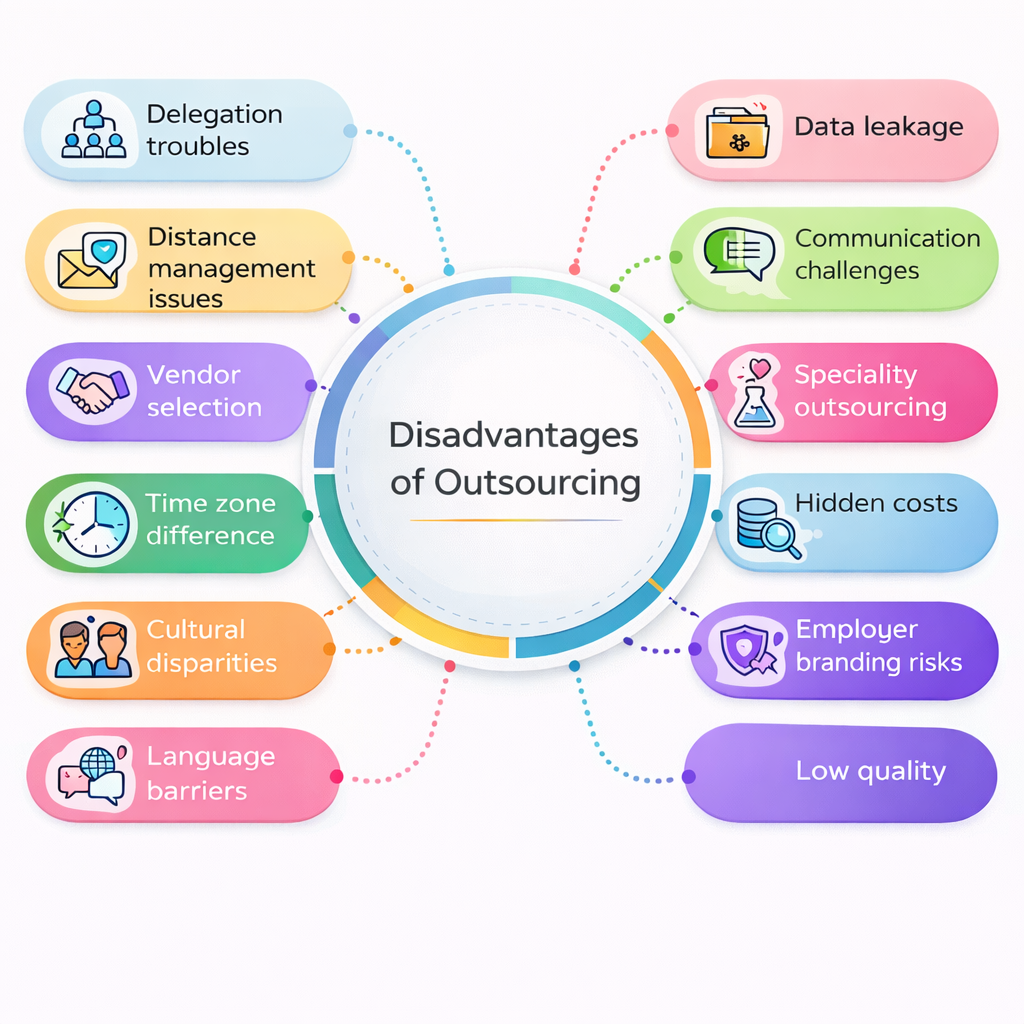
Security isn’t optional. When you outsource software development, you’re trusting another company with your IP, your customer data, and your business logic.
Make sure your outsourcing partner has clear security protocols:
SKM Group treats your code like it's a trade secret—because it is. Security isn’t a feature. It’s a promise.
Outsourcing isn’t one-size-fits-all. There are several pricing models—each with trade-offs.
We offer all three. And we’ll help you choose the one that protects your budget and maximizes your outcome.
When companies search for “outsourcing to Poland,” they’re not just looking for lower development costs. They’re looking for reliability, technical excellence, and European business standards.
Poland has become one of the strongest technology hubs in Europe — and for good reason.
Poland consistently ranks among the top countries in global programming competitions and technical education. Universities in Kraków, Warsaw, and Wrocław produce thousands of highly skilled engineers each year, many specializing in AI, cybersecurity, cloud-native architecture, and fintech systems.
Polish developers are known for strong computer science fundamentals, clean architecture practices, and problem-solving skills — not just task execution.
Unlike many offshore destinations, Poland operates under strict European Union regulations, including GDPR compliance and robust IP protection laws.
For companies handling sensitive financial, healthcare, or enterprise data, this legal stability significantly reduces risk. Contracts are enforceable under EU law, and security frameworks align with ISO and international standards.
One of the biggest hidden risks in outsourcing is misalignment — not technical, but cultural.
Poland offers strong business culture compatibility with the US, UK, Germany, and Scandinavia. English proficiency is high, communication is direct, and project ownership is taken seriously. Polish teams are known for proactive problem-solving rather than passive task delivery.
Poland’s Central European Time (CET) makes collaboration seamless for European clients and highly manageable for North American companies.
You get real-time communication overlap without the delays common in Asia-based outsourcing models.
While Poland may not be the cheapest outsourcing destination globally, it offers one of the strongest value-to-cost ratios.
You gain senior-level engineering talent at rates significantly lower than Western Europe or the United States — without sacrificing code quality, security, or communication standards.
That balance is why Poland is increasingly chosen for fintech, SaaS, AI-driven platforms, and enterprise modernization projects.
For decision-makers, the real question isn’t “Should we outsource?” — it’s “Which model delivers better ROI?”
Let’s break it down.
Hiring an in-house development team involves far more than salaries. You’re covering recruitment fees, onboarding time, benefits, equipment, office space, management overhead, and long-term retention costs. In many Western markets, the fully loaded annual cost of a mid-level developer can exceed $120,000–$160,000.
Outsourcing, on the other hand, converts fixed employment costs into variable operational expenses. You pay for delivery capacity — not idle time, internal HR processes, or long-term liabilities. A dedicated outsourced team may reduce total development costs by 30–50%, depending on region and engagement model.
Today, however, the outsourcing cost model itself is evolving. With the adoption of GenAI tools such as GitHub Copilot and AI-assisted development workflows, productivity benchmarks are shifting dramatically. The conversation is no longer about billable hours — it is about measurable outcomes, delivery velocity, and business impact.
Modern outsourcing engagements are increasingly structured around value delivered: features shipped, cycle time reduced, compliance achieved, infrastructure stabilized.
For decision-makers, this fundamentally changes ROI calculations. If AI augmentation reduces development time by 20–40%, the real question becomes not “How many hours did we buy?” but “How fast did we reach market readiness?” In this context, a forward-thinking delivery partner leveraging GenAI creates structural efficiency — not just cost savings.
But ROI goes beyond raw cost.
In-house teams offer deep product familiarity and long-term continuity. Outsourced teams deliver faster scalability, immediate access to niche expertise, and shorter time-to-market — especially when working with a trusted IT outsourcing partner that understands your business objectives and technology roadmap.
In competitive industries, speed often has a greater ROI impact than marginal cost differences.
In regulated sectors such as FinTech and banking, ROI is also defined by compliance resilience. European frameworks such as DORA (Digital Operational Resilience Act) and the EU AI Act are reshaping how software is built, documented, monitored, and audited. Delivery partners must now provide not only code, but traceability, secure development pipelines, risk controls, and operational transparency.
For financial institutions, the right outsourcing model reduces regulatory exposure while accelerating digital transformation. A partner experienced in regulated environments ensures scalability does not come at the expense of compliance — a critical factor when serving enterprise clients and global advisory firms.
The smartest companies don’t treat this as a binary decision. They build hybrid models — keeping strategic ownership and product leadership in-house, while leveraging external partners for execution, scaling, and specialized expertise.
When evaluated through the lens of AI-augmented productivity and regulatory readiness, outsourcing is not merely a cost-reduction strategy — it becomes a capital allocation strategy. And capital efficiency is what ultimately drives sustainable growth.
Step 1: Defining Clear Goals and Requirements
Clarity beats complexity. Before you write a single line of code, define what success looks like. This means aligning stakeholders, setting KPIs, and creating detailed specs.
Loose requirements create loose outcomes. Clear goals drive precision and momentum.
Step 2: Choosing the Right Outsourcing Model
Not every project needs the same team structure. A proof-of-concept may need just two developers and a designer. A multi-phase enterprise app may require multiple squads, a QA lead, and DevOps from day one.
Choose an outsourcing strategy that reflects your current state—not just your end goal.
Step 3: Establishing Strong Communication Channels
Bad communication ruins good code. Set up regular standups, sprint reviews, and direct lines between your internal team and the outsourcing squad. Use shared dashboards, not email threads, to track progress.
At SKM Group, we integrate into your Slack, Jira, and calendar systems. We don’t just talk—we report, clarify, and listen.
Step 4: Setting Service Level Agreements (SLAs)
SLAs aren’t just paperwork. They define uptime, response times, bug resolution speed, and quality metrics. They hold both sides accountable.
We draft SLAs that are crystal clear, measurable, and enforceable—so there’s no ambiguity down the line.
Step 5: Regularly Reviewing Progress and Performance
Outsourcing is a relationship. And relationships need attention. Don’t wait for problems to surface—create a rhythm of retrospectives, roadmap reviews, and performance evaluations.
We schedule monthly strategic check-ins to make sure delivery stays aligned with your business goals.
Overcoming Communication Barriers with Distributed Teams
Communication isn't just about language—it’s about clarity, context, and consistency. One of the most common pain points in outsourcing software development is misalignment caused by unclear instructions or assumptions.
At SKM Group, we establish communication frameworks from day one. This includes setting expectations for updates, documentation standards, and real-time collaboration protocols. We also assign dedicated liaisons fluent in both technical jargon and business outcomes, bridging the gap between your vision and our execution.
For example, when we worked with a client in the manufacturing industry, our effective communication frameworks reduced the MVP delivery time by 30%.
Managing Time Zone Differences Effectively
Time zones can feel like friction—until you learn how to turn them into leverage. Instead of seeing offset hours as a blocker, see them as a way to build “follow-the-sun” development cycles. Your in-house team finishes their day. Ours picks it up.
We use overlapping working hours to handle sync tasks like standups and demos, then maximize productivity during quiet hours. Our teams in Europe and Latin America are strategically positioned to support both U.S. and EMEA clients with minimal delay.
The key is planning. With clear scheduling and ownership, time zones become a multiplier, not a hurdle.
Ensuring Consistent Quality and Accountability
Quality in outsourced software isn't about luck—it’s about systems. Without proper QA processes and metrics, even the best developers can produce inconsistent results.
We apply rigorous quality control at every stage—code reviews, automated testing pipelines, QA checklists, and UAT validation. Every feature is peer-reviewed and every release is regression-tested.
And we hold ourselves accountable. From sprint velocity to bug rates, we measure everything. You get full visibility into performance, not just promises.
Mitigating Risks in Intellectual Property Protection
IP protection is non-negotiable. When you outsource software development, you’re exposing your core ideas to external contributors. If your vendor doesn’t take security seriously, you’re putting your business at risk.
At SKM Group, we sign NDAs with every team member, follow strict access control policies, and enforce IP assignment agreements. We also offer source code escrow options for added legal assurance.
Your product is your property—and we treat it with the legal, operational, and ethical protection it deserves.
Avoiding Scope Creep with Clear Documentation
Scope creep happens when expectations evolve but contracts don’t. It derails budgets, burns out teams, and fractures partnerships.
The fix? Crystal-clear documentation and change management protocols.
Before kickoff, we co-create detailed specs, user stories, and acceptance criteria. Any change goes through a formal impact analysis process, ensuring both cost and time adjustments are agreed upon transparently.
You stay in control of your budget, your timeline, and your roadmap.
Let’s build powerful software together—custom-fit to your vision: Discover custom development.
Increased Adoption of AI-Driven Development
In 2026, we see a massive shift towards legacy software modernization. Companies are modernizing old systems to ensure they are compatible with new AI-driven tools. AI is no longer just a research lab tool—it’s reshaping the way we build software. From automated code generation to intelligent testing, AI accelerates delivery and enhances quality.
Expect software outsourcing companies to integrate AI tooling directly into their workflows. At SKM Group, we already use AI to optimize estimations, assist in QA, and improve documentation.
The future of outsourcing will be hybrid—human creativity guided by AI efficiency.
The Rise of Hybrid Outsourcing Models
The binary of “offshore vs. in-house” is fading. More companies are turning to hybrid outsourcing models, where core strategy stays internal while execution is distributed across nearshore and offshore teams.
This model offers maximum control with optimal cost efficiency.
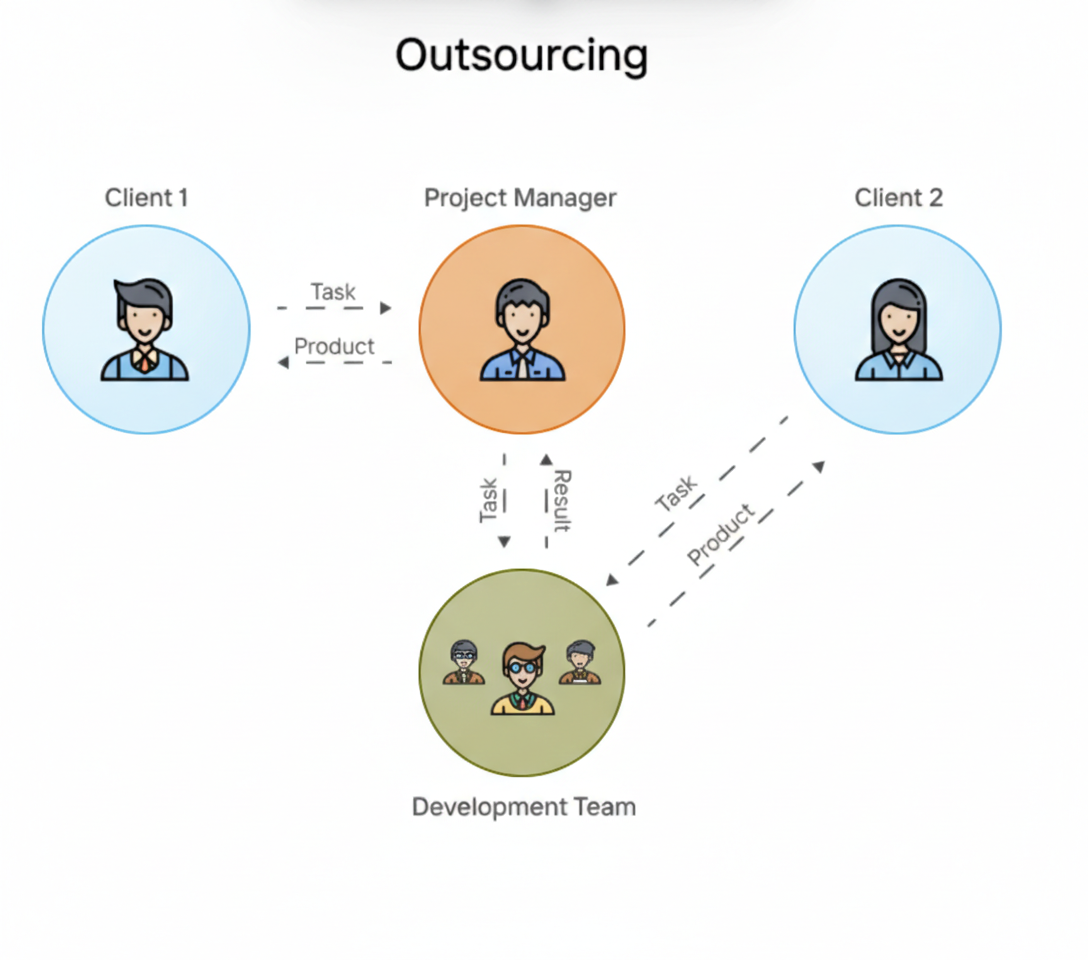
We build hybrid squads that include client stakeholders, SKM product managers, and distributed engineers. You get cohesion without compromise.
Focus on Sustainability in Outsourcing Practices
Sustainability isn’t just about carbon footprints—it’s about ethical labor, inclusive hiring, and long-term partnership health.
Clients increasingly want to know how their outsourcing partner treats its people, builds its culture, and supports local communities. And rightly so.
At SKM Group, we invest in sustainable practices—remote-first hiring, fair compensation, and continuous education. Because great code starts with great people.
Enhanced Collaboration Through Cloud-Based Tools
The rise of cloud-native platforms like GitHub, Jira, Miro, and Slack has redefined how outsourced teams collaborate. Physical location is irrelevant when your workflow lives in the cloud.
These tools don’t just increase transparency—they make cross-border development frictionless.
Every SKM Group project is fully integrated into your existing toolchain. No silos. No black boxes. Just one unified product team, wherever we are.
Growing Demand for Specialized Outsourcing Services
Outsourcing is getting deeper and more domain-specific. Clients aren’t just hiring generalist developers—they want specialists in fintech, IoT, AI, healthcare compliance, and more.
That’s why we’ve built verticalized delivery units. Whether you need SOC2-compliant cloud architecture or a HIPAA-ready mobile app, we bring in domain expertise—not just engineering horsepower.
Outsourcing is evolving from a tactical resource to a strategic differentiator.
If you’ve made it this far, you already understand the stakes. Outsourcing software development isn’t just a cost-saving tactic—it’s a strategic enabler for growth, innovation, and speed.
But success doesn’t come from choosing the cheapest vendor. It comes from choosing the right partner. One that understands your business, respects your users, and owns your outcomes as fiercely as you do.
At SKM Group, we don’t just build software. We build partnerships, platforms, and products that last.
If you're ready to scale with precision, mitigate risk, and unlock technical excellence—we're ready when you are.

Software outsourcing is the practice of delegating software development tasks to external vendors or teams. It allows companies to access specialized skills without maintaining large in-house teams. Outsourcing can cover design, coding, testing, maintenance, or full product lifecycle management. Providers may operate offshore, nearshore, or onshore depending on client preferences. This model offers flexibility, scalability, and significant cost savings.
The primary benefits include reduced costs, faster development cycles, and access to global expertise. Outsourcing also allows businesses to scale teams up or down easily. It helps companies focus internal resources on strategic initiatives instead of technical execution. Many vendors bring industry-specific insights and advanced technologies to projects. Over time, outsourcing can enhance innovation and operational efficiency.
The three main models are offshore, nearshore, and onshore outsourcing. Offshore involves teams in distant countries, typically offering the most cost savings. Nearshore outsourcing uses geographically closer partners for easier collaboration. Onshore keeps development within the same country, ensuring full cultural and time zone alignment. Companies often mix these models to balance price and communication needs.
Common risks include communication issues, data security breaches, and misaligned expectations. Poorly written contracts can lead to scope disputes or inconsistent quality. To mitigate these, businesses should establish clear SLAs and maintain active oversight. Choosing reputable, certified vendors also reduces risk. A structured approach turns outsourcing from a gamble into a strategic advantage.
Evaluating experience, technical expertise, and client references is essential. Look for partners with proven track records and transparent processes. Assess their communication skills, project management tools, and data security policies. Pilot projects are an effective way to test compatibility. The right provider acts as a long-term partner invested in your success.


In our team, Dominik Bigosiński is responsible for driving the growth of online businesses through the strategic use of content. As an expert in his field, he has collaborated with organizations from the US, UK, Norway, and Poland since 2018, contributing to the development of over 100 blogs and supporting more than 450 B2B and e-commerce brands worldwide. His passion for conscious personal growth and philosophy is reflected in his work, where he focuses on delivering thoughtful, audience-centered strategies that drive long-term results.
Hire our experienced IT experts. Flexible, effective, and ready to start.
Discover moreStrategic insights into technology, software development, and digital growth

At SKM Group, we often tell our clients that building software is only the first chapter of the story. The rest of the book is the software maintenance process—the continuous effort required to keep your system healthy, secure, scalable.

The speed of change is ruthless. Systems that once powered your business can quickly become the anchors that hold it back. At SKM Group, we’ve seen this story unfold across industries.

Technology moves fast. Your clients move faster. And when systems stop working, even for a moment, your business feels the weight instantly. That’s where an IT Helpdesk becomes.

When you're steering a tech-driven business, every dollar invested in software must work harder and smarter. Outsourcing lets you harness global expertise while minimizing overhead and accelerating delivery timelines.

If you're evaluating how to accelerate digital initiatives while staying lean, software development outsourcing delivers a precise answer. By partnering with external experts, you tap into specialized skills and proven delivery processes

Nearshore Software Development Outsourcing is the strategic delegation of software engineering tasks to external teams located in neighboring or nearby countries. It’s not just about saving money—it’s about alignment.

Evaluate an outsourced development team for your legacy stack. Cut sprint delays, reduce IT overhead by 30%, and integrate .NET engineers in 6 weeks..

Software Development Nearshore refers to outsourcing your software projects to teams in neighboring or nearby countries. It's a model that balances cost-efficiency with strategic proximity.
Software outsourcing means handing over your software development to an external partner, often located in another country or region. It’s not just about cutting costs—although that's a common reason.

In 2025, selecting the right Software Development Outsource Company is no longer just a matter of cost—it's a mission-critical decision that impacts scalability, security, and competitive edge.

Every modern business relies on technology to stay competitive. But maintaining IT infrastructure, security, and efficiency in-house can be overwhelming and costly. This is where Managed Services in IT come in.

By outsourcing IT operations and infrastructure management to expert providers, companies can focus on their core business activities without the burden of handling complex IT tasks internally.

Technology is the backbone of modern business, and Managed IT Services have become the key to maintaining a secure, efficient, and scalable IT environment. Whether you run a small startup or a global enterprise, Managed IT Service Providers offer.

As a small business owner, you likely wear many hats. From managing operations to driving growth, your plate is always full. That’s where IT outsourcing for small businesses comes in—a strategic solution to offload technical responsibilities

Properly selecting a web development company is one of the most important decisions you must make, significantly affecting your project's success. In the US alone, there are approximately 4.3 million software houses;

Discover the world of .NET development in this comprehensive guide. Learn what a .NET developer does, the skills needed, and the importance of .NET technology in building scalable and reliable applications.

Discover effective strategies for managing IT costs in a rapidly changing technological landscape. Learn how flexible budgeting, forecasting, and prioritizing investments can help businesses save money while enhancing profitability and competitivenes

Discover why soft skills are as vital as technical expertise for programmers. Explore the growing importance of communication, collaboration, and empathy in software development.

Explore the pros and cons of desktop, remote, and hybrid work models in the IT industry. Learn how these models impact productivity, employee satisfaction, and competitive advantage, with a focus on IT outsourcing and custom software development.

Discover the environmental impact of the IT industry, from carbon emissions and energy consumption to raw material extraction and e-waste. Learn how sustainable practices can mitigate these effects, leading to a greener digital future.

Navigating remote work and IT outsourcing? Discover how to leverage the cultural and geographic diversity of international teams to drive innovation while addressing common challenges.

Inclusive software enhances user engagement and promotes a positive brand image, making it a strategic business asset. Create inclusive software designs that cater to all users, regardless of their abilities, age, or cultural background.

Discover how IT outsourcing revolutionizes HR management, enhancing agility and efficiency. Explore benefits like cost reduction, access to global talent, and streamlined processes.

Discover the importance of accurate technical skills assessment in IT recruitment. Explore methods like technical interviews, online tests, live coding, and homework assignments.

Explore the role of soft skills in diverse IT roles, from programming to client interactions, and learn how they contribute to effective collaboration, innovative problem-solving, and lasting client relationships.

Learn best practices for managing your IT outsourcing team and turning challenges into growth opportunities. Learn about the different types of outsourcing contracts

Ready to revolutionize your IT strategy? Learn the top 5 factors for choosing the perfect outsourcing partner. How can understanding your business needs drive IT success? Who are the key players in the global IT outsourcing market?

In the tech world, companies often face a common problem - employees leaving. This is especially tricky when it comes to IT developers. As the need for specific skills grows and the competition for the best IT experts gets tougher.

In the dynamic landscape of software creation, where innovation and efficiency are paramount, the concept of IT outsourcing has emerged as a strategic alternative that's catching the attention of businesses worldwide.

In the landscape of the software industry, the success of a business hinges on its ability to assemble the right team with the right skills.One of the questions on every tech entrepreneur's mind: how do you get the best talent on board?

Comments