Re-architecting a live print-on-demand system
Home >
Lulu is a leading global publishing platform that provides scalable infrastructure for authors, creators, and publishers to sell books worldwide. Through direct ecommerce integrations, API automation, print-on-demand production, and global distribution services, the company enables efficient and flexible publishing at scale. Focused on innovation and operational excellence, Lulu continuously develops digital solutions that optimize publishing workflows, production processes, and logistics performance across international markets.
www.lulu.com
Lulu Press, Inc.
USA
Architecture Re-design
Front-end development
Back-end development
Desktop Application Development (WPF)
Deployment pipelines & monitoring
Reporting migration (Crystal Reports to DevExpress)
.NET 8
WPF
Web API
DevExpress

THE CHALLENGE
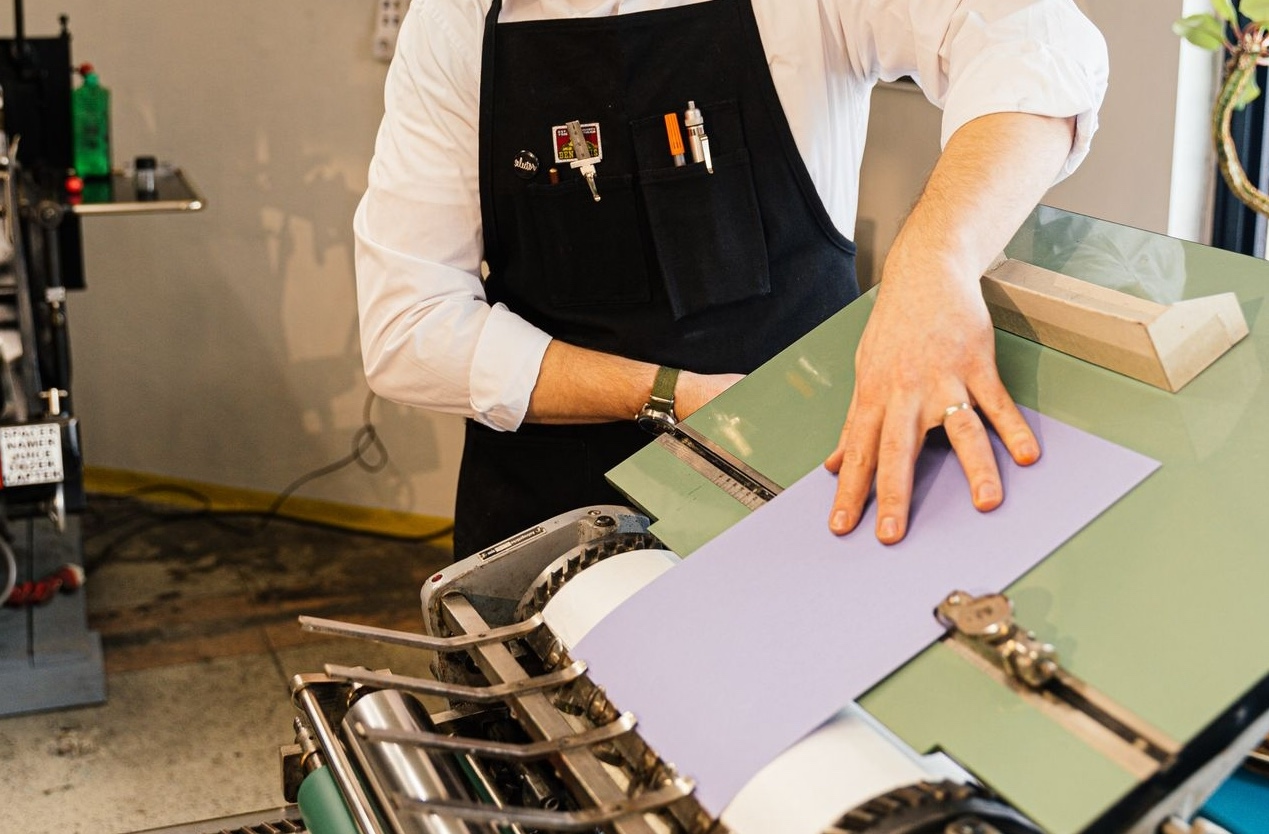
ERA, the core system governing the entire order lifecycle for Bridgeport National Bindery, one of Lulu’s key manufacturing partners, was heavily limited by its monolithic architecture. Tightly coupled components slowed down new feature deployments and created performance bottlenecks during peak publishing seasons. The ultimate constraint was that the system could not be taken offline: books had to ship every single day without a single minute of factory interruption.
THE SOLUTION
Instead of a risky "Big Bang" rewrite, we implemented a Strangler Fig strategy to migrate functionality incrementally. To ensure absolute data safety, both legacy and new systems ran against a single, unchanged database, completely eliminating the risk of data drift. The upgraded WPF operator terminals were deployed station by station, running in parallel with the old terminals to securely verify stability under real production loads. The scope also covered upgrading the ERP and its supporting apps to .NET 8, replacing Crystal Reports with DevExpress, and building deployment pipelines and monitoring.

THE RESULTS
The entire large-scale re-architecture was delivered in the background, making it completely invisible to end customers. The shared-schema approach guaranteed zero data drift by design, while the station-by-station rollout ensured a low-blast-radius deployment. The client now has a clean, modern .NET architecture built for rapid feature integration and seamless scaling alongside Lulu.com. The new software led to a reorganization of Lulu’s whole packing and shipping area and greatly improved the handling of one-item shipments. Many small UI improvements made data entry easier and reduced user error.


For businesses that operate around the clock, downtime is not an option. By using an incremental modernization approach, new components can be introduced gradually while the existing system remains fully operational, ensuring uninterrupted business continuity.
A phased migration reduces implementation risk, allows continuous validation in production environments, and enables teams to deliver improvements faster. It also minimizes disruption for end users and operational staff while maintaining access to critical business functions.
Modern architectures improve scalability, maintainability, and development speed. They make it easier to introduce new features, integrate with external systems, handle increasing workloads, and support long-term business growth without the limitations of legacy software.
Reach out to us and discuss your specific needs. We're here to help!

Product information website - Transparent offer, integration with Microsoft Dynamics and communication with the brand's customers
Practical insights into the architecture, development, and maintenance of IT systems

Discover how we transformed a complex registration process into a seamless, mobile-first booking engine for Polish Soccer Skills. See the design decisions and automation tools that reduced cart abandonment and simplified camp management at scale.

Discover how we helped the Hutchinson Group, a global leader in transportation solutions, transform their analog quality control into a fully automated digital system using vision-based product verification.

Custom Chrome plug-in from SKM Group revolutionizes report management in beauty salons by automating and optimizing processes in Versum. The article discusses the challenges of manual reporting, the plug-in's features, and the benefits

Automate your inventory management and expand your sales channels effortlessly! Our client faced challenges integrating their vast inventory with Allegro, Poland's top marketplace, due to their existing system's limitations.

In the IT industry, project pricing can be a time-consuming challenge. Our innovative tool streamlines the process, allowing for accurate quotes, scope analysis, and time management.

Discover SKM Group's expertise in EU-funded IT projects, from innovative mobile platforms to personalized customer experiences. Explore how our support, from proposal writing to implementation, leverages EU funds to drive IT industry growth

Explore how our collaboration with an international automotive parts manufacturer led to the development of an innovative quality assessment system. Learn how our client experienced significant benefits and including scrap reduction.

Based on the Umbraco v7 system, the appearance of the online store for Verge Sport company has been updated. The main tasks included expanding the editing capabilities from the administrative panel and optimizing the platform's speed.

In today's digital era, a well-functioning online store has become a crucial tool for companies looking to sell their products or services. For the Polish company Krosno S.A, we created a modern online store based on the PlentyMarkets system.

In the modern manufacturing sector, where the pace of change and growing customer demands are on a daily basis , efficiency and process optimization have become key factors determining success.