


At SKM Group, we meet organizations every week that still rely on infrastructure designed fifteen or twenty years ago. It runs. It supports operations. It feels stable. But beneath that surface, the architecture quietly expands your cybersecurity exposure. Legacy systems are not only slow or expensive to maintain. They reshape your risk profile. They widen your attack surface. They reduce visibility. They slow down response. They create technical debt that compounds over time. If you are responsible for technology decisions, you are also responsible for exposure.
Before you can reduce risk, you must answer a fundamental question: what is exposure in cyber security?
Exposure is the measurable degree to which your assets are accessible, reachable, or exploitable by a threat actor. It is not the same as vulnerability. It is not the same as risk. It is the condition that makes exploitation possible.
Exposure exists when:
In modern enterprises, exposure is dynamic. It changes with every configuration update, new integration, and third-party dependency. In legacy environments, exposure accumulates silently because architecture was not designed for today’s threat landscape.
From a threat modeling perspective, exposure in cybersecurity represents the intersection of three elements: asset value, attack surface accessibility, and control maturity.
When we conduct structured threat modeling at SKM Group, we evaluate:
Exposure increases when threat actors can traverse trust boundaries without friction. In legacy systems, those boundaries are often implicit, not enforced. Old assumptions remain hardcoded into architecture.
Threat modeling shows you not only where vulnerabilities exist, but how they can be chained. Legacy systems enable chaining.
Your attack surface includes every digital point where an attacker can interact with your environment.
In legacy infrastructures, the attack surface expands through:
Older systems were built in a perimeter-based security era. Firewalls were the wall. Inside the network was trusted space. Today, that assumption is invalid.
Legacy IT often lacks micro-segmentation, identity-based controls, and dynamic access policies. As a result, your internal attack surface becomes as dangerous as your external one.
At SKM Group, we often see organizations underestimate internal exposure. Yet most modern breaches escalate through lateral movement after initial compromise.
A vulnerability is a flaw. An exploit is a method of using that flaw. Cybersecurity risk exposure is the condition that allows the exploit to reach the vulnerability.
Legacy systems increase exposure because:
The relationship is simple but dangerous. When unsupported software accumulates known vulnerabilities, your exposure shifts from theoretical to probable.
Probability drives risk. And risk drives business impact.
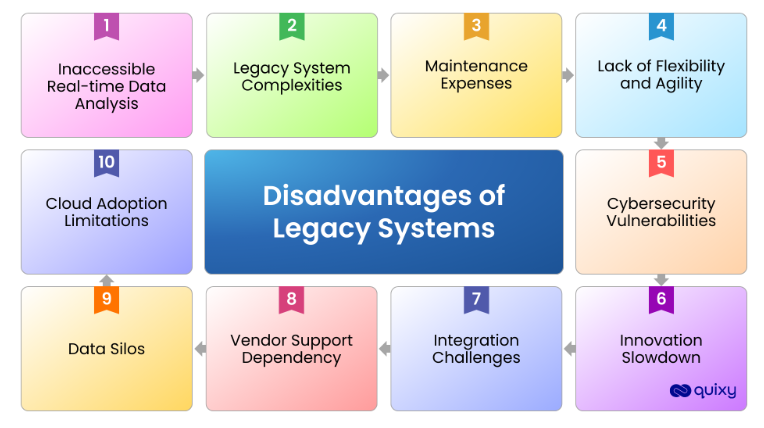
Legacy protocols were not designed with encryption or authentication as defaults. Many rely on trust-based communication models.
Examples include outdated SMB versions, legacy LDAP configurations, or early SSL/TLS implementations.
These protocols expand exposure because:
When such protocols remain active for compatibility reasons, they create systemic exposure. Even if only one legacy system requires them, the entire environment may inherit weaker security standards.
This is how architectural debt spreads.
Technical debt is not only a financial metric. It is a security multiplier.
In legacy systems, technical debt manifests as:
Each of these increases your cybersecurity exposure because they slow remediation. When patching one component risks breaking another, decisions get delayed. Delays create windows of opportunity for attackers.
At SKM Group, we treat technical debt as a quantifiable driver of cybersecurity risk exposure management. The longer a legacy component remains in production without modernization, the higher its risk weighting in exposure scoring models.
Technical debt is not neutral. It is cumulative.
Configuration drift occurs when systems deviate from their baseline over time.
In legacy environments, drift is common because:
Drift increases exposure in subtle ways. A forgotten test account. An expired certificate not renewed. A firewall rule temporarily opened and never closed.
Individually, these seem minor. Collectively, they widen the attack surface.
Without continuous cyber exposure monitoring, drift remains invisible. And invisible exposure is the most dangerous type.
Legacy infrastructure challenges structured cybersecurity risk exposure management because it resists automation, integration, and standardization.
Modern security depends on real-time telemetry. Legacy systems often provide minimal logs, inconsistent event formats, or no API access.
This creates asymmetry. Attackers automate. Defenders manually investigate.
Unsupported Operating Systems And End-Of-Life Software Risks
End-of-life operating systems no longer receive vendor patches. Vulnerabilities remain permanently exploitable.
When such systems remain connected to production networks, your cybersecurity exposure becomes predictable. Attackers scan for known OS signatures. They match them to public exploit databases.
Unsupported software also introduces compliance risks. Many regulatory frameworks require supported systems.
Your exposure is no longer only technical. It becomes legal and reputational.
Hardcoded Credentials And Weak Authentication Mechanisms
Legacy applications often rely on hardcoded service accounts or static credentials stored in configuration files.
This increases exposure in cybersecurity because:
Once compromised, these credentials enable lateral movement. They are often shared across systems, multiplying impact.
Inadequate Patch Management Pipelines
Modern patch management relies on automation and centralized orchestration.
Legacy systems frequently require manual patching or downtime windows that are operationally difficult to schedule.
The result is predictable:
Each delay increases your measurable cybersecurity risk exposure.
Obsolete Encryption Standards And Cryptographic Weaknesses
Encryption standards evolve. Algorithms once considered secure are now broken or computationally trivial to attack.
Legacy systems often still use:
These cryptographic weaknesses reduce confidentiality and integrity. They expand exposure not only to direct attacks, but to passive interception and replay techniques.
Encryption that once met standards now fails modern security audits.
Flat Network Architectures And Lack Of Segmentation
Many legacy environments operate on flat network models. Once inside, movement is unrestricted.
Without segmentation:
This architectural weakness amplifies the cyber security effects of any breach. The initial compromise is rarely the real damage. The spread is.
Limited Logging And Incident Response Capabilities
Legacy systems often produce limited logs. Some generate logs in non-standard formats. Others overwrite logs quickly due to storage constraints.
When visibility is low:
Higher Mean Time to Detect and Mean Time to Respond are natural consequences. And every additional hour of undetected intrusion increases exposure.
Let your team focus on vision while we deliver dependable IT outsourcing.
The broader cyber security effects of legacy infrastructure extend beyond technical layers. They affect governance, compliance, and strategic agility.
When legacy systems remain central to operations, they constrain transformation. Cloud migration slows. Automation stalls. Security modernization becomes fragmented.
Exposure becomes embedded in business processes.
Increased Probability Of Lateral Movement During Breaches
Legacy authentication models often rely on implicit trust. Shared credentials and excessive privileges are common.
This increases the probability that once an attacker gains initial access, they can pivot across systems.
Flat architecture plus weak identity controls equals high lateral mobility.
In our assessments at SKM Group, lateral movement potential is often the highest risk multiplier in legacy estates.
Higher Mean Time To Detect (MTTD) And Mean Time To Respond (MTTR)
Detection depends on telemetry. Response depends on automation.
Legacy systems reduce both.
Manual log reviews, limited SIEM integration, and inconsistent event correlation increase MTTD. Slow containment procedures increase MTTR.
Extended dwell time amplifies cybersecurity exposure because attackers explore, escalate, and exfiltrate over time.
Regulatory Non-Compliance Due To Outdated Controls
Many compliance frameworks require:
Legacy systems often fail one or more of these controls. Non-compliance increases financial penalties and regulatory scrutiny.
Your cybersecurity risk exposure management strategy must align with regulatory demands. Legacy systems complicate that alignment.
Escalation Of Insider Threat Risks
Legacy access models frequently lack granular role definitions. Permissions accumulate over years.
When employees change roles, access is rarely reduced.
This creates insider exposure. Whether malicious or accidental, misuse of privileges becomes more likely.
Weak monitoring makes detection difficult.
Dependency Chains And Third-Party Risk Amplification
Legacy applications often depend on outdated third-party components. Vendors may no longer provide updates.
If a supplier suffers a breach, your exposure increases indirectly. Supply chain risk is amplified when dependency chains are undocumented.
Modern third-party risk management depends on transparency. Legacy systems resist transparency.
To move from intuition to action, you must quantify exposure.
A cyber exposure score is a composite metric that evaluates:
In legacy environments, exposure scoring must account for technical debt weighting. An unsupported system with medium vulnerabilities may represent higher practical risk than a modern system with a high-severity but patchable flaw.
At SKM Group, we recommend integrating exposure scoring into executive dashboards. Decision-makers need clarity, not raw vulnerability counts.
A well-designed cyber exposure score translates technical complexity into strategic language. It enables prioritization.
And prioritization is the core of effective cybersecurity risk exposure management.
Legacy applications increase cybersecurity exposure not only because they are old, but because they were designed under assumptions that no longer hold true.
Most legacy applications were built for closed environments. They assumed:
Today, your systems are interconnected with cloud platforms, mobile users, third-party APIs, and remote access gateways. The original design logic collapses under modern connectivity demands.
One major technical driver of cybersecurity risk exposure in legacy applications is monolithic architecture. Monoliths centralize logic, authentication, and data access in a single codebase. This creates a single point of failure. When a vulnerability exists, it often grants broad access because separation of concerns was minimal.
Another driver is insecure integration layers. Legacy systems frequently rely on middleware or adapters to communicate with modern services. These bridges become weak points. They translate protocols, bypass native authentication controls, and introduce undocumented data flows.
Hard dependencies on outdated libraries also increase exposure. Many legacy applications embed third-party components that no longer receive updates. These components often contain known vulnerabilities that are easy to exploit. You cannot simply patch them without risking application failure. This operational constraint directly increases your measurable exposure in cybersecurity.
Finally, legacy code rarely follows secure development lifecycle standards. Input validation may be inconsistent. Error handling may leak internal information. Logging may expose sensitive data. Over time, these weaknesses accumulate and expand your attack surface invisibly.
From our experience at SKM Group, the most dangerous driver is not any single flaw. It is architectural rigidity. When systems cannot evolve, exposure becomes structural.
Modernize your systems with agile Custom software development.
Reducing exposure requires visibility. Visibility requires structured cyber exposure monitoring.
In hybrid environments where on-prem legacy systems coexist with cloud infrastructure, monitoring must be unified. Fragmented tools create blind spots.
You need continuous scanning, contextual risk scoring, and automated remediation capabilities that operate across legacy and modern assets alike.
Continuous Vulnerability Scanning Across On-Prem And Cloud Assets
Legacy systems are often excluded from automated scanning because they are considered “too sensitive” or “too fragile.” This exclusion creates blind zones.
Continuous scanning should include:
Scanning must be authenticated where possible. Unauthenticated scans only reveal surface-level findings. Deep visibility reduces cybersecurity risk exposure by identifying misconfigurations, outdated components, and weak services early.
Monitoring cannot be quarterly. It must be continuous.
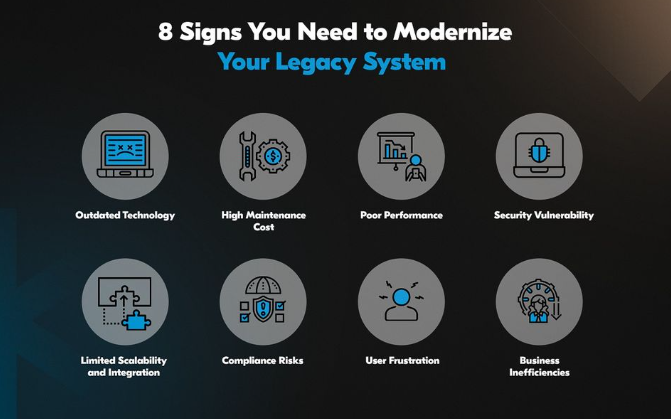
Integration Of SIEM And SOAR For Real-Time Exposure Tracking
Security Information and Event Management (SIEM) systems aggregate logs. Security Orchestration, Automation, and Response (SOAR) platforms automate actions.
Legacy systems often produce limited logs, but integration is still possible through log forwarding agents or API connectors.
Real-time exposure tracking requires:
When SIEM and SOAR are integrated properly, you move from reactive detection to proactive exposure control.
This shift directly reduces your cyber security effects during incidents because response becomes structured, not improvised.
Asset Discovery And Shadow IT Detection Mechanisms
You cannot protect what you do not know exists.
Legacy environments frequently contain forgotten servers, abandoned applications, or undocumented network devices.
Asset discovery tools should:
Shadow IT expands cybersecurity exposure silently. Each unknown asset is an unmanaged risk node.
At SKM Group, we begin exposure assessments with full asset inventory mapping. Hidden systems often represent the highest-risk components.
Risk-Based Prioritization Using Contextual Threat Intelligence
Not every vulnerability requires immediate remediation. Prioritization is essential.
Risk-based models combine:
This approach produces a dynamic cyber exposure score per asset or application.
For example, a medium-severity vulnerability on an externally exposed legacy server handling sensitive data may require faster remediation than a high-severity issue on an isolated internal test machine.
Context transforms raw data into decision intelligence.
Automated Remediation Workflows For High-Severity Findings
Legacy systems often resist automation, but partial automation is still achievable.
Automated workflows can include:
Automation reduces human delay. Reduced delay reduces cybersecurity risk exposure.
Even if full modernization is not immediate, exposure windows can be shortened significantly.
KPI Frameworks For Monitoring Cybersecurity Risk Exposure Trends
Exposure must be tracked over time.
Key performance indicators may include:
Trends matter more than single snapshots. If exposure scores decline consistently, your strategy works. If they stagnate, structural modernization is required.
Clear KPIs allow executive teams to align security investment with measurable outcomes.
You cannot eliminate all legacy systems overnight. But you can reduce their risk footprint.
Modernization strategies include system refactoring, replatforming, or encapsulation behind secure APIs. In some cases, isolation through network segmentation is the most pragmatic step.
Zero Trust architecture is particularly effective. Instead of assuming internal trust, every request is verified.
Reducing cybersecurity exposure in legacy systems often involves:
Even when the application code remains unchanged, its exposure can be reduced through architectural controls.
At SKM Group, we emphasize phased modernization. Immediate replacement is rarely realistic. Structured exposure reduction is.
Strengthen your operations with scalable IT services.
Technology alone is not enough. People must understand exposure.
A structured cybersecurity exposure management course equips decision-makers and IT teams with:
Education reduces organizational blind spots. When leadership understands exposure metrics, budget allocation becomes strategic rather than reactive.
Training also ensures that modernization initiatives align with measurable cybersecurity risk exposure management objectives.
A structured framework transforms theory into operational discipline.
At SKM Group, we implement a six-step model for sustainable cybersecurity risk exposure management.
Step 1: Comprehensive Asset Inventory And Classification
Every device, application, database, and integration must be documented.
Assets are classified based on:
Without classification, exposure cannot be prioritized.
Step 2: Threat Modeling And Exposure Mapping
Threat modeling identifies attack paths. Exposure mapping visualizes reachable vulnerabilities.
This step connects technical details with business impact. It answers the practical question: if exploited, what happens next?
Mapping transforms abstract risk into visible pathways.
Step 3: Continuous Cyber Exposure Monitoring And Scoring
Continuous cyber exposure monitoring collects vulnerability data, configuration states, and threat intelligence.
Exposure scoring aggregates this data into actionable metrics.
Scoring must be dynamic. When a new exploit emerges, exposure levels adjust automatically.
Step 4: Risk-Based Patch And Configuration Management
Patch management should prioritize assets with the highest cyber exposure score.
Configuration management enforces secure baselines. Drift detection ensures deviations are corrected quickly.
Legacy systems may require compensating controls when patching is impossible.
Step 5: Network Segmentation And Zero Trust Implementation
Segmentation limits lateral movement. Zero Trust enforces identity verification at every access point.
These architectural controls significantly reduce cyber security effects during incidents because attackers encounter friction at each boundary.
Containment becomes feasible.
Step 6: Continuous Security Validation And Penetration Testing
Validation ensures controls work as intended.
Penetration testing simulates adversarial behavior across legacy and modern systems.
Continuous validation closes the loop in cybersecurity risk exposure management. It prevents complacency.
Legacy systems persist because they support business continuity. They are stable. They are familiar.
But stability does not equal security.
Over time, outdated architecture accumulates technical debt, weakens encryption, resists automation, and expands attack surfaces. The result is measurable cybersecurity exposure that increases breach probability and amplifies impact.
You do not need to replace everything at once. But you must measure, monitor, and reduce exposure deliberately.
At SKM Group, we help you transform legacy constraints into controlled, measurable risk domains. We turn opaque environments into transparent systems. We replace uncertainty with data-driven exposure control.
Because in modern cybersecurity, unmanaged exposure is the real vulnerability.

What is exposure in cyber security refers to the degree to which assets are accessible and vulnerable to exploitation. It is measured using factors such as vulnerability severity, exploit availability, asset criticality, network accessibility, and control maturity. Many organizations calculate a composite cyber exposure score to quantify this condition.
Legacy systems increase cybersecurity risk exposure by running unsupported software, using outdated encryption, lacking segmentation, and resisting automation. These factors widen attack surfaces and slow remediation, making exploitation more likely.
A cyber exposure score is a metric that aggregates vulnerability, accessibility, and threat intelligence data into a single risk indicator. It matters because it helps you prioritize remediation efforts based on business impact rather than raw vulnerability counts.
Cyber exposure monitoring provides continuous visibility into vulnerabilities, configuration drift, and threat context. By identifying and prioritizing high-risk assets in real time, it reduces response delays and limits potential damage.


In our team, Dominik Bigosiński is responsible for driving the growth of online businesses through the strategic use of content. As an expert in his field, he has collaborated with organizations from the US, UK, Norway, and Poland since 2018, contributing to the development of over 100 blogs and supporting more than 450 B2B and e-commerce brands worldwide. His passion for conscious personal growth and philosophy is reflected in his work, where he focuses on delivering thoughtful, audience-centered strategies that drive long-term results.
Need tailor-made software? We build scalable, secure solutions from scratch.
Discover moreStrategic insights into technology, software development, and digital growth

Modern engineering teams are under constant pressure. They are expected to deliver faster, maintain reliable systems, operate in secure cloud environments, and achieve predictable outcomes.

Business application development is not only about writing code. It is about making the right decisions before code becomes expensive. At SKM Group, we use product roadmapping to help you turn business goals, system limits, user needs, and technology

When you invest in software, you do not pay only for features. You pay for every future change, every bug fix, every deployment, every security update, and every hour your team spends understanding the system.

When you invest in software, you are making a long-term decision that goes far beyond the initial release. The real challenge begins when your system needs to evolve—when new features are added, integrations are expanded, and existing components must

Poor data architecture does not always break your business systems at once. More often, it creates quiet damage: inconsistent reports, duplicated records, unclear KPIs, and decisions based on numbers nobody fully trusts.

Software complexity rarely appears overnight. It grows quietly with every shortcut, integration, legacy module, and undocumented business rule. At SKM Group, we see how this hidden technical weight can turn even a strong product roadmap into a slow

Your company may have many good tools. But good tools do not guarantee good communication. When business systems stop sharing data clearly, everyday work becomes slower, riskier, and harder to manage.

Every business-critical system has a second life after deployment. That life is shaped by updates, fixes, monitoring, documentation, and technical decisions that are easy to postpone.

At first, manual workflows, disconnected systems, and spreadsheets may seem manageable. But when your company begins serving more customers, processing more data, and managing more complexity, operational inefficiencies become impossible to ignore.

Modern enterprises need more than generic software subscriptions. As operations grow more complex, companies require digital infrastructure that supports automation, scalability, cybersecurity, advanced integrations, and real-time operational visibil

Modern automotive performance is no longer built only in the garage. It is built in software. Today’s vehicles rely on complex ECUs, communication protocols, telemetry systems, and real-time diagnostics that require far more than traditional mechanic

Modern companies no longer struggle with a lack of software. They struggle with too many disconnected tools, fragmented workflows, and operational processes that were never designed to work together efficiently.

If you are making decisions about modern software delivery, you will inevitably ask yourself: what is azure DevOps and why does it matter for your business? At SKM Group, we see it not as a tool, but as a structured ecosystem that connects.

When you invest in custom software, you are not just buying code—you are buying speed, reliability, and confidence. At SKM Group, we rely on DevOps tools as the backbone of that promise.

When you ask what is DevOps engineer, you are really asking about one of the most critical roles in modern software delivery. At SKM Group, we see a DevOps engineer not as a single function, but as a connector of systems, teams, and outcomes.

At SKM Group, you don’t just buy software—you invest in a process that determines whether your product succeeds or quietly fails in the background. One of the most transformative approaches shaping modern software delivery is DevOps.

You have heard the promise. Faster systems. Lower costs. Infinite scale. The cloud as a cure for every architectural weakness accumulated over twenty years of digital growth. And yet, from our experience at SKM Group, we have seen the opposite happen
At SKM Group, we meet organizations every week that still rely on infrastructure designed fifteen or twenty years ago. It runs. It supports operations. It feels stable. But beneath that surface, the architecture quietly expands your cybersecurity exp

Legacy systems rarely fail loudly. They age quietly. They grow around your organization like concrete poured decades ago – solid, load-bearing, but rigid. When documentation disappears, original developers leave, and integration requirements multiply

If you are responsible for technology decisions in your organization, you have probably heard both terms used almost interchangeably. Technical debt. Legacy systems. Obsolete platforms.

When you hear lean software development meaning, you should not think about a trendy buzzword. You should think about engineering discipline designed to remove friction from value delivery.

When you invest in software, you are not just buying code. You are buying speed, predictability, flexibility, and the ability to react to market change. At SKM Group, we see software as a living system, not a finished product frozen in time.

At SKM Group, we often see decision-makers pause at one deceptively simple question: what is a software development kit, and why does it matter so much to the success, cost, and scalability of your digital product?

From the perspective of SKM Group, when you ask what a mobile apps application really is, you are not asking a marketing question. You are asking an engineering question with direct business consequences.

At SKM Group, we see software resilience as the living backbone of modern digital ecosystems. It is the capability of your systems to absorb shocks, maintain essential functions, and recover faster than your business stakeholders expect.

As SKM Group, we often see that companies underestimate how deeply software dependency structures shape the long-term health of their digital products. You might assume dependencies “just work in the background,”
As SKM Group, we see every day how leaders like you face a rising paradox: you’re expected to innovate faster than ever, yet every new system you adopt must now prove its financial value with absolute clarity.

Technology doesn’t wait. Neither should you. Every software environment that powers your operations today will either evolve—or become obsolete. That’s the simple reality of digital transformation.

You’ve probably heard it before – “Customer is king.” But in 2025, that phrase isn’t just a cliché. It’s the operational truth that defines which businesses thrive and which fade into the noise.

Every industry, from manufacturing to finance, now depends on intelligent software products that enhance performance, streamline workflows, and enable long-term scalability.

When you think about the cloud, you probably imagine endless virtual servers humming somewhere in the background, waiting to process your business logic. But here’s the thing—you no longer have to.

Digital transformation isn’t a buzzword anymore—it’s your reality. You already know that running your business on outdated systems slows down growth, frustrates employees, and makes customers leave for competitors who can deliver faster.

When you sit down to plan your next digital product, one of the first questions that arises is: which app development frameworks will actually get you there?
The digital race is not about speed alone—it’s about precision, resilience, and the ability to deliver value faster than your competitors. As decision-makers in technology, you know the stakes are high.

When you build software, you’re not just creating a product—you’re making a promise. A promise that it will work as intended, delight its users, and deliver measurable value. But promises in software are fragile.

You’ve seen the term software scalability meaning pop up everywhere lately. But what does it really mean for your business—not just for developers? At SKM Group, we define scalability.

You know your business. You know your customers. But in today’s digital-first market, knowing isn’t enough – acting fast, adapting to trends, and delivering personalized experiences is what separates market leaders from followers

If you’re searching for ways to streamline complex builds or accelerate your software roadmap, specialized outsourcing is a smart direction. By leveraging Application Development Outsourcing or SaaS Development Outsourcing, you gain rapid access.

Your business runs on technology, whether you notice it daily or not. Choosing the right IT services shapes everything from operational resilience to your capacity for innovation.

If you're leading a business today, you're likely balancing innovation with efficiency, speed with precision, and growth with risk. That’s where specialized software outsourcing services step in — not just as a cost-saving tool, but as a strategic.

Software development processes best practices aren't just buzzwords—they are critical frameworks that shape how successful products come to life. As someone making decisions about technology investments

At SKM Group, we believe that truly successful software starts with a deep understanding of Software Engineering and Design—not just as a process, but as a discipline that brings structure

At SKM Group, we believe clarity is the cornerstone of successful software delivery. If you're navigating digital transformation or evaluating software partners, understanding what is software development methodology

For decision-makers managing IT outsourcing or legacy modernization, choosing between Agile and Waterfall is a financial and strategic decision. This guide explores how iterative implementation minimizes risk and accelerates ROI in distributed teams.

The ability to build a high-performance outsourcing development team can dramatically accelerate product delivery while reducing operational overhead. But to do it right, you need more than just a vendor

Offshore outsourcing software development has evolved from a cost-saving tactic into a strategic pillar for tech-driven organizations. When executed properly, it empowers you to scale faster, access niche expertise, and accelerate time-to-market with

Technology is the backbone of modern business. Whether you're a startup or an enterprise, your IT infrastructure determines how efficiently you operate, how well you serve customers, and how secure your data remains. Choosing the right IT service pro

The software development process is a structured approach to creating software, ensuring efficiency, quality, and alignment with user needs. It encompasses a series of stages, from gathering requirements to maintaining the final product.

Choosing the right business software development partner is one of the crucial decisions that might shape your company's future. With so many choices for enterprise software development companies, how will you go about making the right choice?

Choosing the right partner for your software project is a critical decision. Should you hire an individual custom software developer or collaborate with a full-fledged software development company?

Customized software solutions are the answer for companies that want to streamline operations, optimize workflows, and stay ahead. Here at SKM Group, we understand your need for tailored solutions that align with your unique goals.

Investing in custom software development can feel like navigating uncharted waters. As a decision-maker, you might wonder how custom software development costs against off-the-shelf alternatives, or whether it’s worth pursuing.

IT projects often run over budget or take too long. Agile changes that by delivering value quickly, adapting to evolving needs, and giving leaders control over costs and ROI, helping businesses stay competitive and responsive.

When embarking on a new software project, you're faced with a crucial question: will this idea work? You don’t want to spend months on development only to discover that a critical assumption was wrong.

If you've ever wondered how to create an app, you're not alone. Many businesses are seeking ways to expand their digital footprint, and a dedicated app can be a powerful tool to achieve just that.

Creating a mobile application is complex, and understanding the development cost is crucial for any business aiming to launch a successful app. With costs influenced by numerous variables, knowing what affects your budget and where your money goes

Having a clear, structured approach is essential. Whether you're diving into your first project or overseeing a complex, custom build, the journey can feel overwhelming.

Understanding what is a software life cycle is crucial. The term encapsulates every phase a software product goes through, from inception to retirement. At SKM Group, when you understand this life cycle deeply.

Encountering technical problems is inevitable in our tech-driven lives. This article outlines basic steps to troubleshoot common issues like internet connectivity, software bugs, and peripheral device problems.


Comments